Xīwángmǔ

西王母Xiwangmu

The Queen Mother of the West in the Shan Hai Jing: a mountain deity with leopard tail, tiger teeth, and wild hair crowned with a sheng headdress.《山海经》记载的西王母:状如人而长着豹尾虎齿,蓬发戴胜,居于玉山,穴居于昆仑之丘。

Form外形

Shaped like a person外貌形体大略像人

其狀如人

Tail尾齿

Leopard tail, tiger teeth豹的尾巴与老虎的牙齿

豹尾虎齒

Voice声音

Good at whistling擅长长啸

善嘯

Hair发胜

Wild hair, sheng headdress蓬乱头发上戴着玉胜

蓬髪戴勝

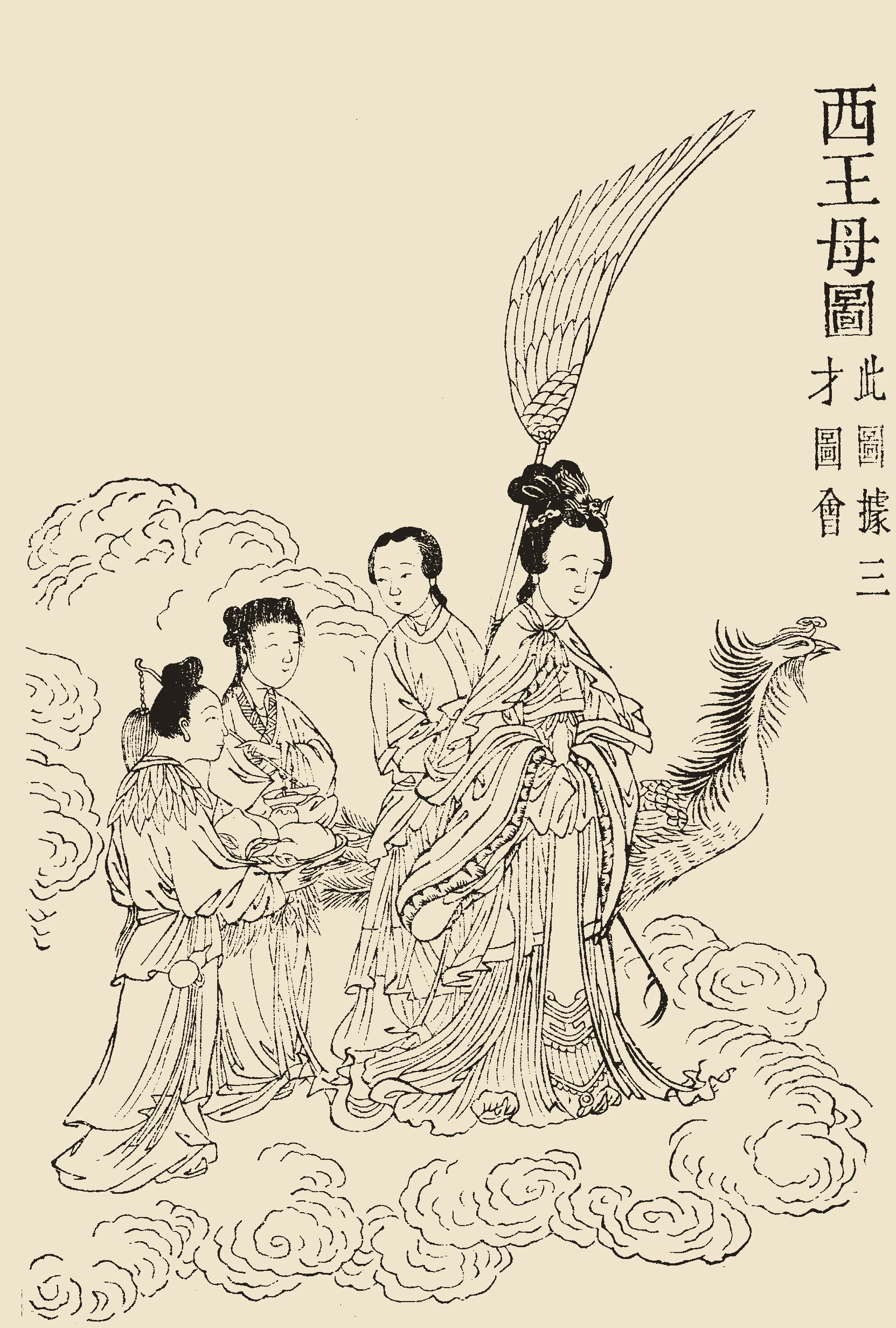
Woodblock print from Gujin Tushu Jicheng showing the Queen Mother of the West standing on clouds in robe and headdress beside attendants and a bird, inscribed 'Xiwangmu Tu (Ci Tu Ju Sancai Tuhui)'玉勝Sheng headdress头上所戴之胜玉冠饰玉勝Sheng headdress头上所戴之胜玉冠饰人面Human form画中所绘的人形面容人面Human form画中所绘的人形面容盛服Court robes画中所绘之盛装华服盛服Court robes画中所绘之盛装华服鳥Accompanying bird画中身旁的一只鸟鳥Accompanying bird画中身旁的一只鸟
是西王母所居也

This is where the Queen Mother of the West dwells.

山海經·西山經
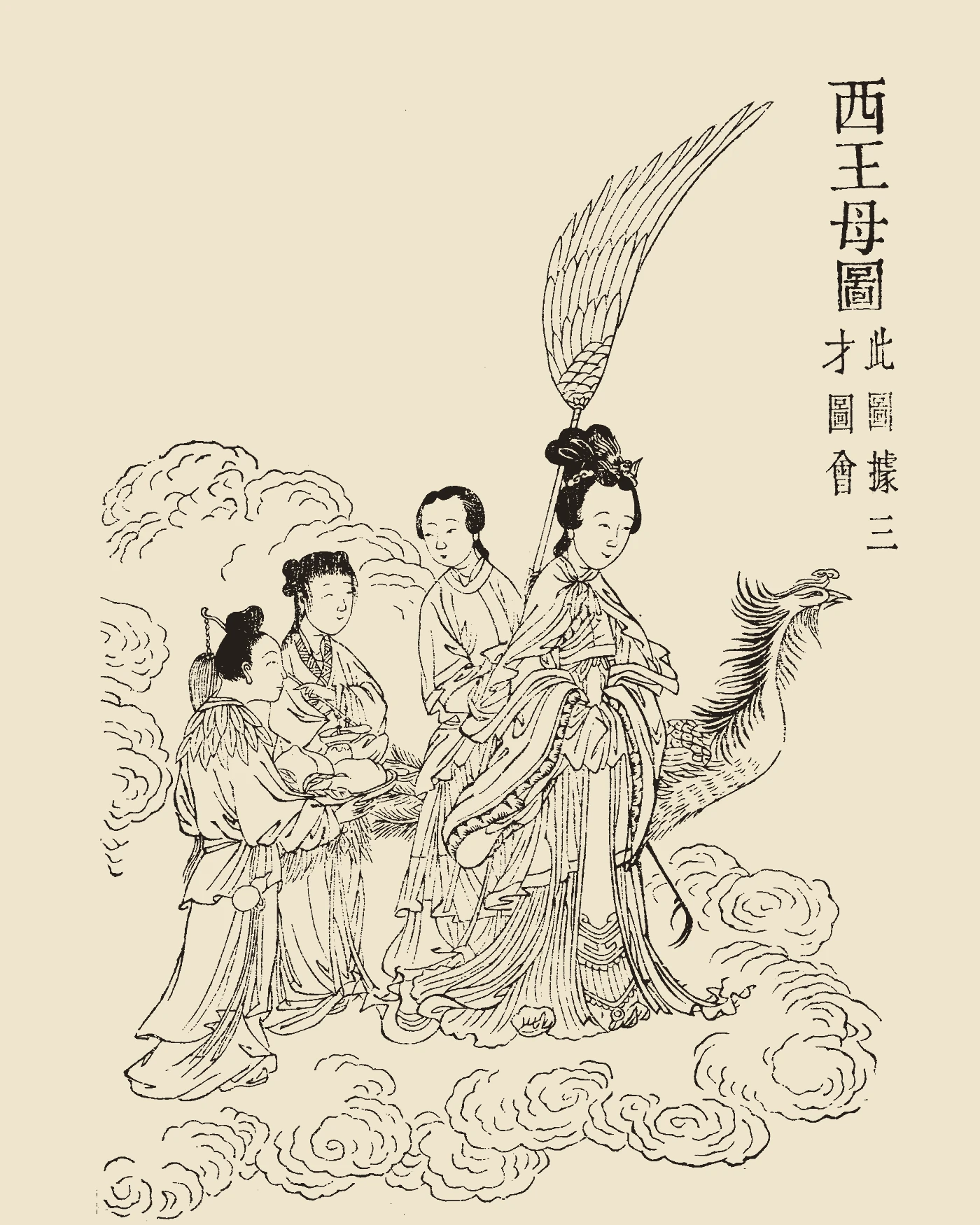
Xiwangmu Tu 西王母圖 (after Sancai Tuhui), showing the Queen Mother of the West in court robes upon clouds with attendants. Gujin Tushu Jicheng 古今圖書集成, Shen Yi Dian, woodblock print, 1726清·陈梦雷等编《古今图书集成·神异典》“西王母图(此图据三才图会)”,雍正四年(1726)铜活字印本 · Public domain公有领域

Highlighted words: anatomy part · feature · form type — tap to jump标色词:形态部位 · 特征 · 形态类别,点击可跳转

The texts原文

Original Text & Translation原文与译文

山海經·西山經 · Shan Hai Jing · Wikisource

又西三百五十里,曰玉山,是西王母所居也。西王母其狀如人,豹尾虎齒而善嘯,蓬髪戴勝。
Another 350 li to the west is Mount Yu, where the Queen Mother of the West dwells. The Queen Mother of the West is shaped like a human, with a leopard's tail and tiger's teeth, and is good at whistling; she wears a sheng headdress upon wild disheveled hair.

山海經·大荒西經 · Shan Hai Jing · Wikisource

西海之南,流沙之濱,赤水之後,黒水之前,有大山,名曰崑崙之丘。……有人,戴勝,虎齒,有豹尾,穴處,名曰西王母。
South of the Western Sea, by the shores of the flowing sands, behind the Red Waters and before the Black Waters, there is a great mountain named the Mound of Kunlun. ... There is a person with a sheng headdress, tiger's teeth, and a leopard's tail, dwelling in a cave, named the Queen Mother of the West.

Comparing the Books典籍对比

The Shan Hai Jing describes Xiwangmu as human-like with a leopard's tail and tiger's teeth, living on Mount Yu and in a cave at Kunlun. The 1726 woodcut instead shows a woman in flowing court robes, without those animal features.
The story来历与故事

The Queen Mother of the West in the Shan Hai Jing: a mountain deity with a leopard's tail and tiger's teeth, crowned with a sheng headdress, who dwells on Mount Yu and in a cave on Mount Kunlun.

The Mountain Goddess of Jade Mountain玉山灵窟:豹尾虎齿与蓬发戴胜

The Classic of the Mountains and Seas records Xiwangmu dwelling at Mount Yu and Mount Kunlun.《山海经》记载西王母居住在玉山,又穴居于昆仑之丘,其状如人,长着豹尾与虎齿。

In the Classic of the Mountains and Seas, Xiwangmu dwells at Mount Yu, described as shaped like a human with a leopard's tail, tiger's teeth, skilled at whistling, and wearing a sheng headdress upon disheveled hair.

In the Classic of the Great Western Wilderness, she is recorded dwelling in a cave upon Mount Kunlun, also having a sheng headdress, tiger's teeth, and a leopard's tail.

From Cave-Dwelling Deity to Robed Goddess从穴居神灵到端严圣母

While early texts record her animal features and cave dwelling, later woodblock prints depict her in ornate robes.古经记载她长着豹尾虎齿,而1726年的版画把她画成盛装站在云上的女子,身旁有侍者和一只鸟。

While early texts record her animal features and cave dwelling, the 1726 woodblock print shows her as a woman in court robes.

The 1726 Gujin Tushu Jicheng print portrays Xiwangmu standing upon clouds with court attendants and an accompanying bird, following the iconographic tradition recorded in the Sancai Tuhui.

Classical Iconography and Image Traditions经典图像与神女画谱

In imperial woodcuts such as the Gujin Tushu Jicheng, Xiwangmu is portrayed in court robes amidst clouds.《古今图书集成》版画题“此图据三才图会”,画中西王母盛装站在云上,身旁有侍者和一只鸟。

In imperial woodcuts such as the 1726 Gujin Tushu Jicheng, Xiwangmu is portrayed in flowing court robes amidst clouds, accompanied by attendants and an auspicious bird.

The classical text and the woodblock print differ: the text gives her a leopard tail and tiger teeth, while the print shows a woman in ceremonial robes.

Record档案

Record Card档案卡

TypeDeity (leopard-tailed, tiger-toothed goddess of Mount Yu)
Also known asQueen Mother of the West
Earliest sourceShan Hai Jing 山海經 (Classic of the Mountains and Seas, c. 4th–2nd c. BCE)
DwellingMount Yu (玉山); a cave at the Mound of Kunlun (崑崙之丘)
NatureGood at whistling (善嘯); lives in a cave (穴處)
In the printA robed woman standing on clouds with attendants and a bird; no tail or tiger teeth
Earliest source山海經·西山經
Source books山海經·西山經
山海經·大荒西經
Image sourceChen Menglei 陳夢雷 (ed.) · Wikimedia Commons
LicensePublic domain

Frequently Asked Questions

Where does Xiwangmu dwell in the Shan Hai Jing?

The Western Mountains text records her dwelling at Mount Yu, while the Great Western Wilderness text records her dwelling in a cave on Mount Kunlun.

What does Xiwangmu look like in the earliest classical text?

She is shaped like a human, with a leopard's tail, tiger's teeth, wild hair, and a sheng headdress, and is skilled at whistling.

Does the 1726 print show her leopard tail and tiger teeth?

No. The 1726 print, which is marked as based on the Sancai Tuhui, shows her in flowing court robes on clouds without animal features.