The headless warrior who fought the Supreme Deity: beheaded at Mount Changyang, he made eyes of his nipples and a mouth of his navel, brandishing shield and axe in eternal defiance.与天帝争神断首的上古战神:以乳为目、以脐为口,于常羊之山操持干戚、起舞不屈。
Eyes & mouth乳目脐口
Nipples as eyes, navel as mouth双乳作眼,肚脐作嘴
乃以乳為目,以臍為口
Burial葬地
Head buried at Mount Changyang首级葬在常羊山
葬之常羊之山
Weapons干戚
Shield and battle-axe手执盾牌战斧
操干戚以舞
Will猛志
A fierce will that endures斗志永远不灭
刑天舞干戚,猛志故常在
刑天
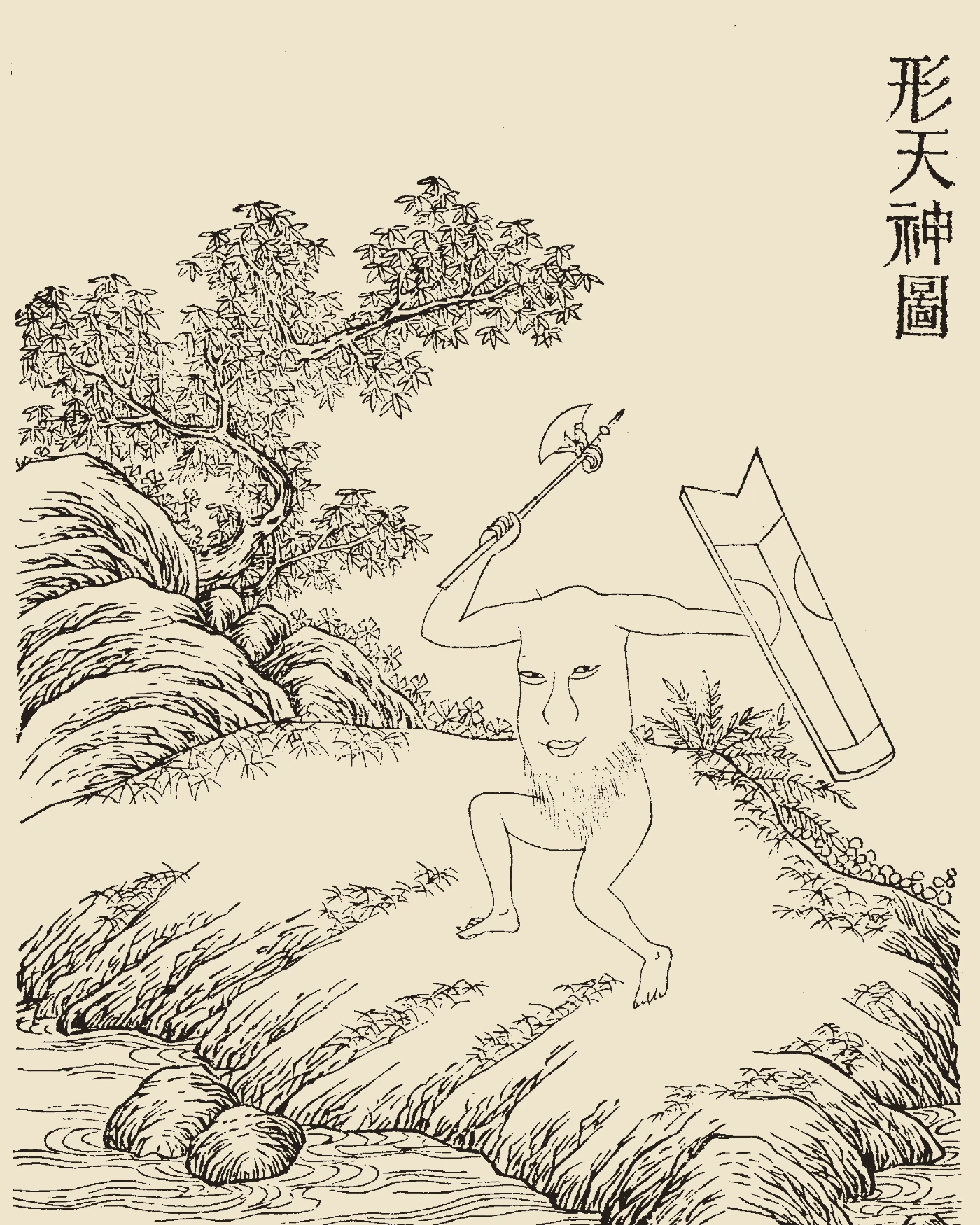
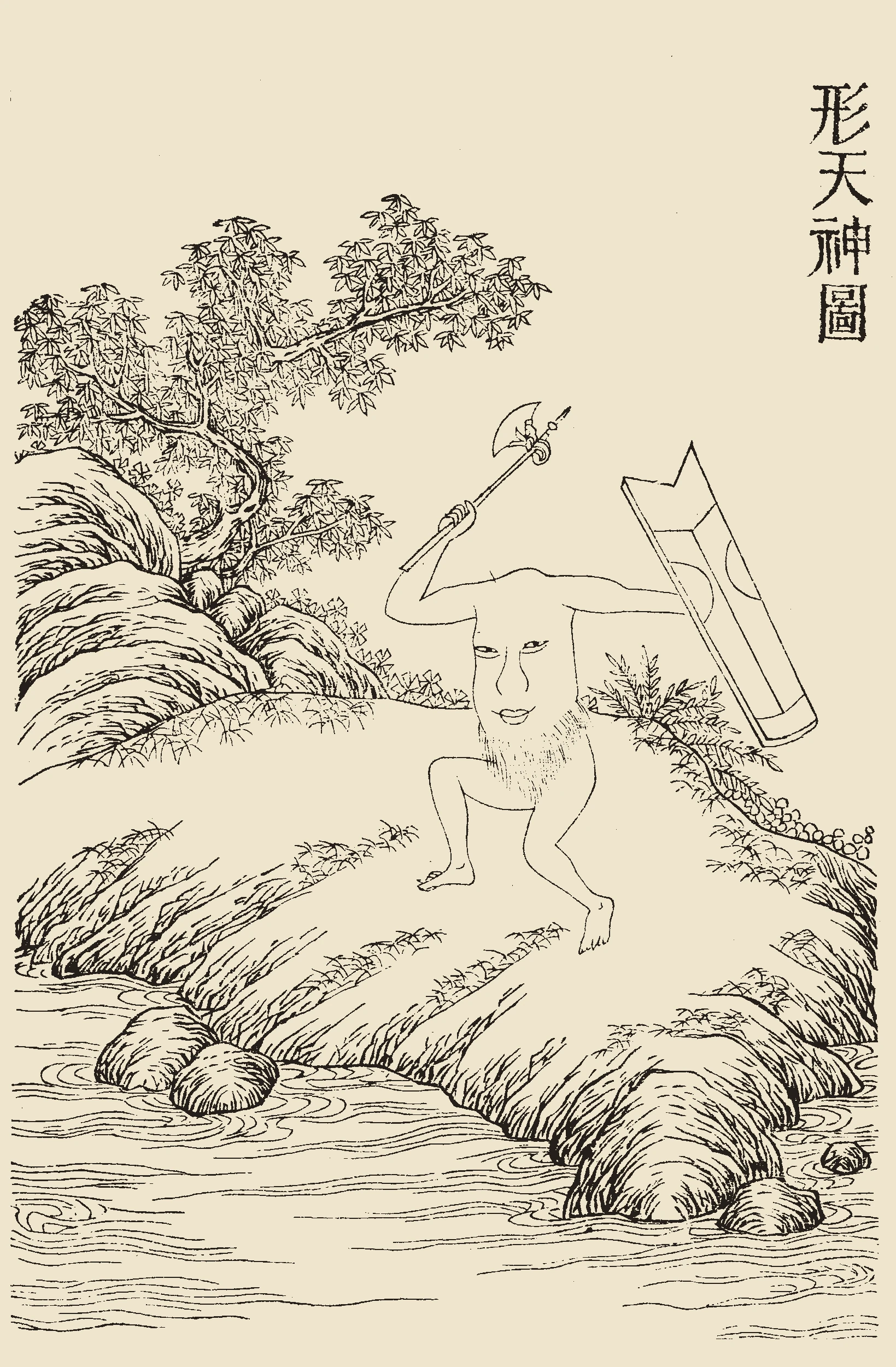
Gujin Tushu Jicheng’s 1726 imperial woodblock print depicting Xingtian, the headless warrior brandishing shield and axe in perpetual combat.清代《古今图书集成》中的形天神图,呈现断首之后以乳为目、以脐为口、操干戚起舞的战神形貌。
形天與帝爭神,帝斷其首
Xingtian contended with the Supreme Deity for divine rule, and the Deity cut off his head.
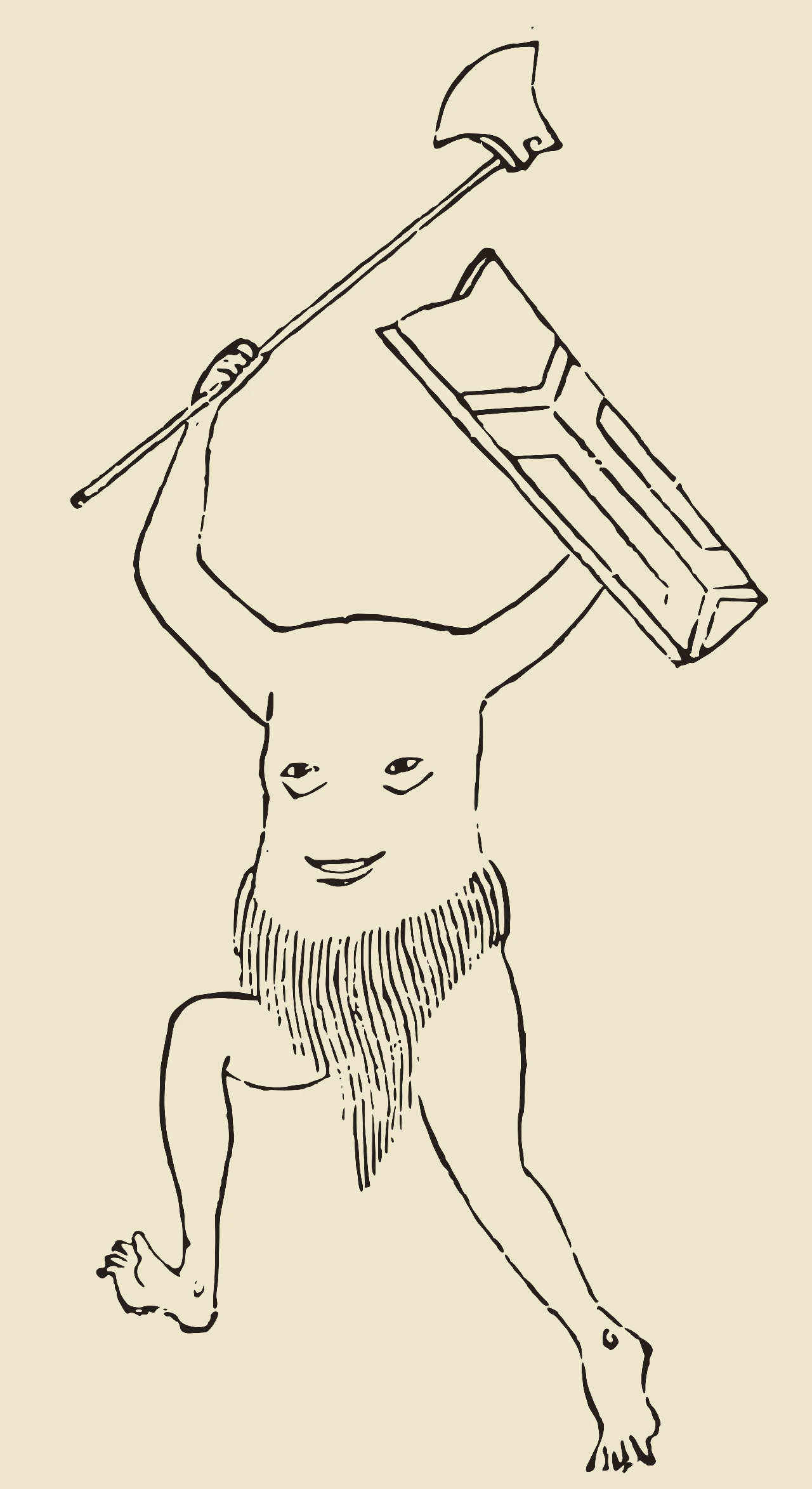
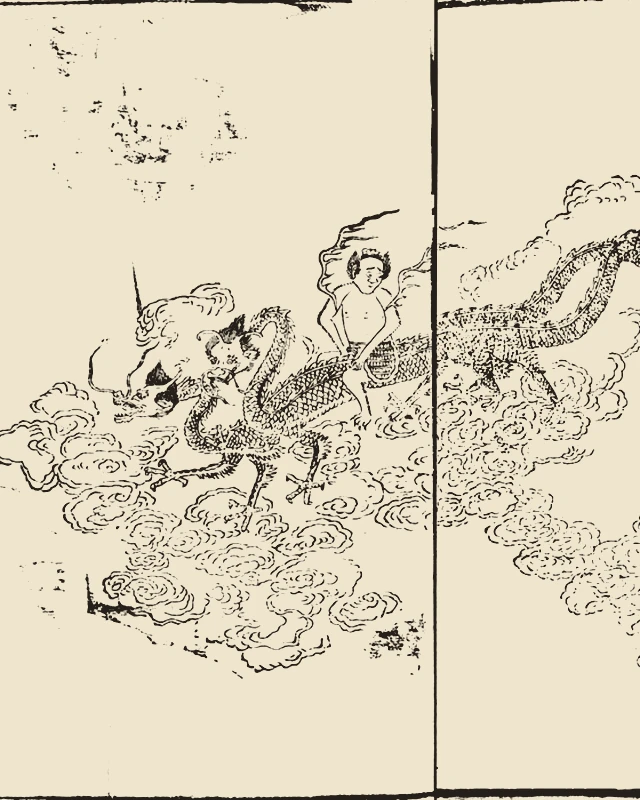
Hu Wenhuan (1593): leaping warrior with sash and notched axe胡文焕(1593):佩戴飘带战裙、执卷刃战斧的腾跃战神 — Leaping, with a sash skirt, notched axe (戚) and shield (干); chest eyes as big circles凌空跃起,系帛带裙,执带齿战斧和盾;乳目画成大圆圈
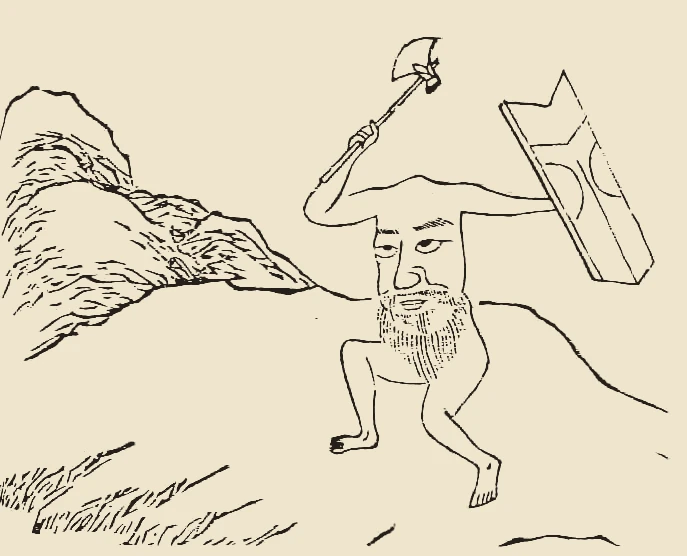
Landscape warrior against Mount Changyang: Jiang Yinghao (1597)蒋应镐(1597):伫立于常羊山荒野中的断首武士 — Stands on rocky ground in a full mountain landscape, with poleaxe and buckler; not leaping立于常羊山石坡上,执长柄大斧与圆盾,不是凌空起舞
Xingtian Shen Tu 形天神圖, the headless warrior brandishing shield and axe. Gujin Tushu Jicheng 古今圖書集成, Shen Yi Dian (Spirits and the Supernatural), woodblock print, 1726清·陈梦雷等编《古今图书集成·神异典》“形天神图”,雍正四年(1726)铜活字印本 · Public domain公有领域Xingtian 刑天. Hu Wenhuan, Shanhaijing Tu 山海經圖 (Illustrated Classic of Mountains and Seas), juan 1 (Overseas West), 1593明·胡文焕编《山海经图·海外西经》“刑天”,万历二十一年(1593)刊本 · Hu Wenhuan 胡文煥 (ed.)胡文焕 编, 15931593年Xingtian 刑天. Jiang Yinghao, Shanhaijing Tushi 山海經圖繪 (Illustrated Mountains and Seas), 1597明·蒋应镐绘《山海经图绘》“刑天”,万历二十五年(1597)刊本 · Jiang Yinghao 蔣應鎬 (fl. late 16th century)蒋应镐(活动于16世纪末), 15971597年
Highlighted words: anatomy part · feature · form type — tap to jump标色词:形态部位 · 特征 · 形态类别,点击可跳转
Xingtian fought with the Supreme Deity for supremacy. The Deity severed his head and buried it at Mount Changyang. Thereupon he made eyes of his nipples and a mouth of his navel, and grasping his shield and battle-axe, he danced on.
Jingwei carries tiny twigs in her beak, purposing to fill the vast azure sea; Xingtian brandishes shield and battle-axe, his fierce will enduring forever. Once changed into other things they have no worries, nor having transformed do they feel regret. In vain did they hold their former resolve—how could that fortunate hour ever arrive!
Comparing the Books典籍对比
The Classic of Mountains and Seas records the primal myth of Xingtian's decapitation at Mount Changyang and his miraculous anatomical transformation into a headless combatant. Six centuries later, poet Tao Yuanming paired Xingtian with Jingwei, transforming the defeated combatant into the quintessential symbol of immortal defiance whose fierce will outlives bodily death.
The story来历与故事
The ultimate archetype of defiant courage in Chinese mythology: a headless warrior who fought the Supreme Deity for cosmic supremacy. Beheaded and buried beneath Mount Changyang, he transformed his chest nipples into eyes and his belly button into a mouth, seizing his shield and battle-axe to dance on in eternal combat.
The Decapitation at Mount Changyang常羊之山的断首之战
Challenged the Supreme Deity for supremacy; after losing his head, he transformed his torso to fight on.与天帝争神战败被诛,首级埋葬常羊山,却以躯干化为头面继续死战。
In the Classic of Regions Beyond the Western Seas (Haiwai Xi Jing) in the Shan Hai Jing, the ancient myth of Xingtian is recorded with arresting concision: 'Xingtian fought with the Supreme Deity for supremacy. The Deity severed his head and buried it at Mount Changyang.' In Chinese mythological tradition, the Supreme Deity (Di) is widely identified with the Yellow Emperor (Huangdi) during his primeval wars to establish cosmic order, with Xingtian standing as a ferocious general or tribal chieftain aligned with the defeated Flame Emperor (Yandi) or Chiyou. Refusing to submit to celestial subjugation, Xingtian marched alone to the very summit of heaven to duel the sovereign of the cosmos.
After an earth-shattering struggle, the Supreme Deity struck off the warrior's head with a celestial blade. To ensure that the immortal rebel could never retrieve his lost skull and revive his full strength, the Emperor cleaved Mount Changyang (常羊之山) in two, buried the head deep within the chasm, and sealed the mountain back together. Deprived of his cranial organs, the fallen titan did not perish. Instead, rising through an astonishing transformation of flesh, he converted the severed neck into his body's summit, made his nipples as eyes to gaze upon the realm once more, transformed his navel as mouth to roar defiance across the clouds, and grasped his battle-axe and shield to continue the war.
Xingtian 刑天. Hu Wenhuan, Shanhaijing Tu 山海經圖 (Illustrated Classic of Mountains and Seas), juan 1 (Overseas West), 1593明·胡文焕编《山海经图·海外西经》“刑天”,万历二十一年(1593)刊本
The Shield and the Battle-Axe干戚之舞与形天之名
Brandishing the gan shield and qi battle-axe, Xingtian turned defeat into an eternal martial ritual.手执干盾与戚斧起舞,将战败的绝境化为永不终结的战意象征。
The defining physical emblem of Xingtian is the phrase 'brandishing shield and axe' (操干戚以舞). In ancient Chinese warfare, the gan (干) was a rectangular or oval defensive war shield made of ox hide or wood, while the qi (戚) was a broad-bladed battle-axe mounted upon a long wooden shaft, used by front-line shock troops to shatter enemy formations. Together, gan and qi formed the classic metonym for martial arts and ritual combat (干戚之舞). Yet while earthly warriors laid down their weapons upon mortal injury, Xingtian turned his dance into an eternal, trance-like ritual of pure defiance, lunging and parrying against invisible celestial armies across the barren slopes.
The name is written two ways. The Wikisource text of the Classic of Regions Beyond the Western Seas prints 刑天 and notes 形天 as a variant reading, and the Tao Yuanming poem quoted on this page also has 刑天. The character 刑 means punishment or mutilation, which fits a warrior who lost his head, but none of the texts quoted here explains the name, so its original meaning remains uncertain.
Tao Yuanming and the Enduring Fierce Will陶渊明的赞叹与猛志常在
Tao Yuanming paired him with Jingwei, immortalizing his fierce will as a symbol of unbroken defiance.陶渊明将刑天与精卫并列,使“猛志常在”成为中华精神中抗争不屈的千古绝唱。
For over two thousand years, the most celebrated literary homage to Xingtian was composed by the revered Eastern Jin dynasty poet Tao Yuanming (365–427 CE). In the tenth of his thirteen poems titled Reading the Shan Hai Jing (讀山海經 其十), Tao looked beyond worldly disappointments to celebrate the unyielding will of mythological underdogs, immortally pairing the headless titan with the sea-filling bird Jingwei: 'Jingwei carries tiny twigs, meaning to fill the vast azure sea; Xingtian brandishes shield and battle-axe, his fierce will enduring forever' (刑天舞干戚,猛志故常在).
Tao Yuanming's insight lies in recognizing that true heroism is measured not by victory, but by unbroken purpose in the face of inevitable defeat. Though Tao lamented in the subsequent couplet that their former hopes were in vain ('In vain did they hold their former resolve, how could that fortunate hour ever arrive!'), he immortalized the phrase 'meng zhi' (猛志, fierce and indomitable will). Unlike Greek tragic heroes whose suffering often ends in despair or resignation, Xingtian's headless defiance asserts that the human spirit cannot be extinguished even when the body is dismembered and the cause is lost.
The Headless Rebel in Modern Culture从上古战神到当代反抗象征
From ancient mythology to modern fantasy and gaming, Xingtian endures as the ultimate archetype of unyielding rebellion.从古典神话到当代国漫、游戏与奇幻文学,刑天始终是不屈反抗精神的不朽化身。
In modern Chinese education and public consciousness, Xingtian stands alongside Kuafu chasing the sun, Nüwa mending the sky, and Jingwei filling the sea as a foundational myth taught to school children across the Sinophone world. His iconic imagery has been celebrated in modern literature, from Lu Xun's vivid reflections in Dawn Blossoms Plucked at Dusk to contemporary historical epics, where the headless titan serves as a timeless emblem of revolutionary resolve, anti-tyrannical resistance, and courage against impossible odds.
Across global entertainment, animation, and digital gaming, Xingtian has enjoyed a vibrant renaissance. He appears as a fearsome playable Guardian deity in Hi-Rez Studios' international MOBA SMITE (wielding his massive axe and shield while terrifying foes with his abdominal maw), inspires formidable boss encounters in modern action RPGs such as Fate/Grand Order and Chinese fantasy gaming, and features prominently in hit donghua and tokusatsu franchises like Armor Hero. Whether depicted as a colossal titan in futuristic mecha or a primeval deity on ancient battlefields, Xingtian remains the ultimate symbol of the warrior who never lays down his arms.
Record档案
Record Card档案卡
Type
Deity / Transformed Warrior (headless giant)
Also known as
Xingtian 形天 (original Shan Hai Jing graph); The Headless Giant; Sovereign of Fierce Will
Earliest source
Shan Hai Jing 山海經 (Classic of Regions Beyond the Western Seas, c. 4th–2nd c. BCE)
Weapons
Gan 干 (round/oval war shield) and Qi 戚 (broad-bladed battle-axe)
Resting place
Mount Changyang 常羊之山 (where his severed head was buried by the Emperor)
Symbolism
Pinnacle of indomitable defiance, unyielding willpower (猛志常在), and resistance against impossible odds
Xingtian is an ancient Chinese deity and warrior from the Shan Hai Jing (Classic of Mountains and Seas). He famously fought the Supreme Deity for celestial supremacy; when he was decapitated and his head was buried under Mount Changyang, he refused to yield, converting his nipples into eyes and his navel into a mouth to fight on with battle-axe and shield.
Why does Xingtian have no head, and how does he see and eat?
According to the Shan Hai Jing, Xingtian was decapitated by the Supreme Deity, who buried his head inside Mount Changyang so it could never be rejoined. Undeterred, Xingtian miraculously transformed his anatomy: his two chest nipples became his eyes ('以乳為目'), enabling him to see, and his navel became his gaping mouth ('以臍為口'), allowing him to roar battle cries and speak.
What does 'Xingtian dances with shield and axe' symbolize?
The phrase, immortalized in Tao Yuanming's poem Reading the Shan Hai Jing, symbolizes indomitable willpower, perseverance, and fearless resistance against overpowering fate. Even when bodily mutilated and facing impossible odds, Xingtian represents the unconquerable spirit that refuses to surrender.
What weapons does Xingtian use?
Xingtian wields a gan (干) and a qi (戚). In ancient Chinese warfare, the gan was a defensive combat shield made of hardened wood or ox hide, and the qi was a heavy, broad-bladed battle-axe used by shock troops to shatter enemy armor. Together, gan and qi formed the classic martial kit of primeval Chinese warriors.