Luánniǎo

鸞鳥Luan

The divine auspicious bird from the Shan Hai Jing: pheasant-like with five-coloured plumage, it sings in musical harmonies and heralds peace across the realm.《山海经》记载女牀之山的神鸟鸾鸟:状如翟而五采文,见则天下安宁;《说文》说它鸣中五音。

Body身形

Like a long-tailed pheasant样子像长尾野鸡

其狀如翟

Colour羽色

Red, five colours红色带五彩

赤色,五采

Voice鸣声

Harmonizes in five tones叫声合乎五音

鳴中五音

Omen吉兆

Peace upon the realm出现则天下安宁

見則天下安寧

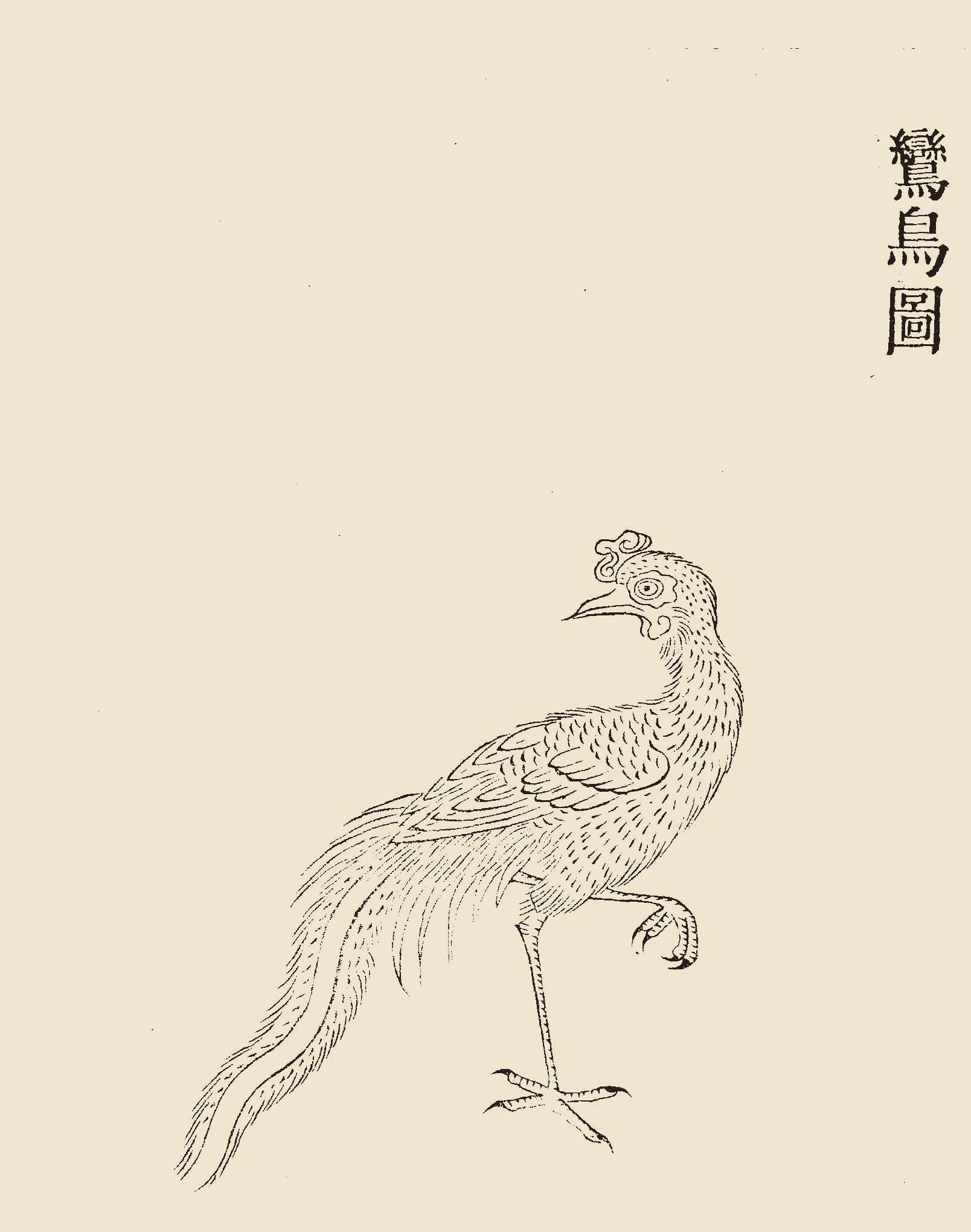
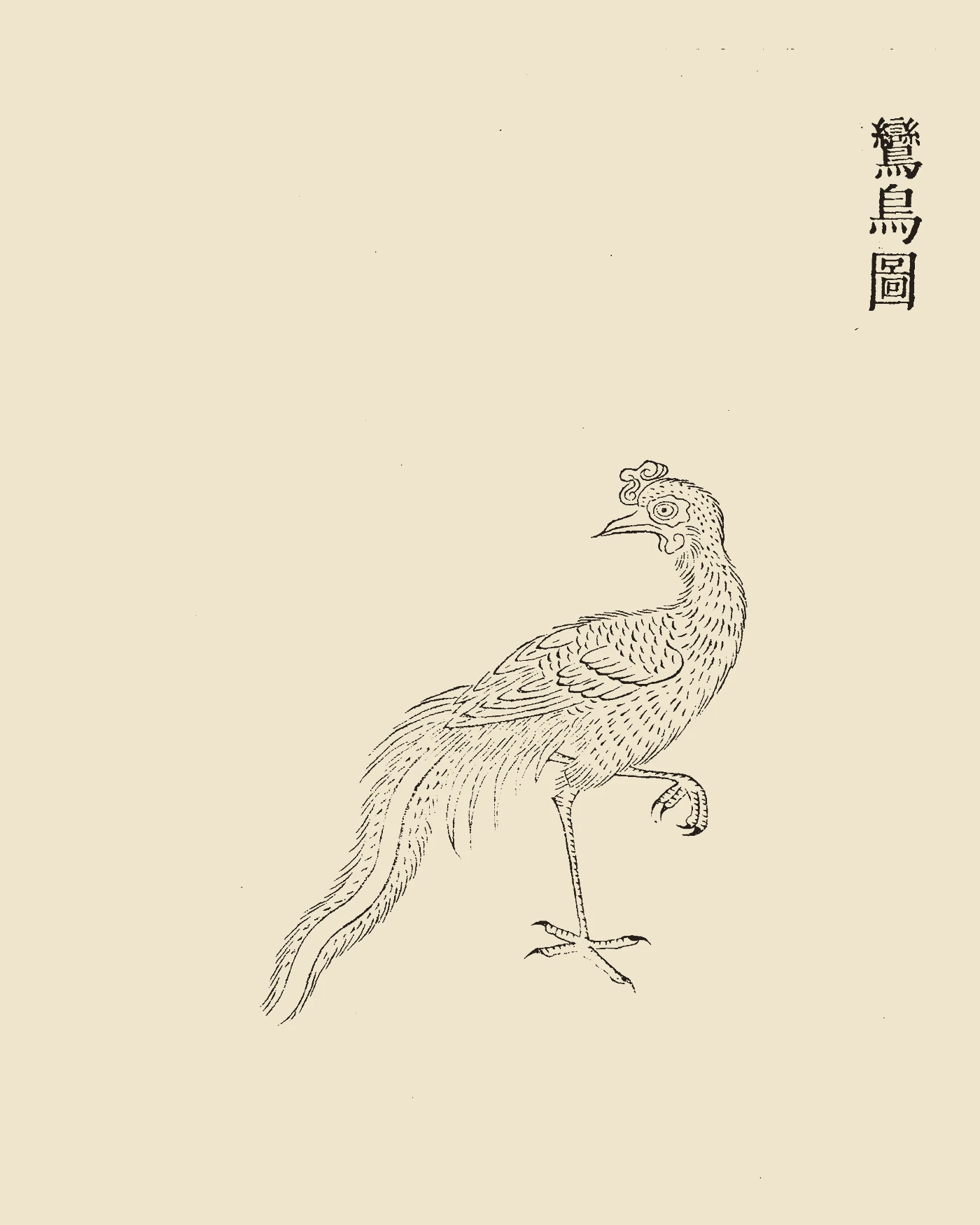
Woodblock print from Gujin Tushu Jicheng showing a long-tailed crested bird standing on one leg, inscribed 'Luan Niao Tu'鳥首Bird head鸟的头部鳥首Bird head鸟的头部羽翼Folded wing收拢的翅膀羽翼Folded wing收拢的翅膀單足One leg raised一只脚抬起單足One leg raised一只脚抬起長尾Long tail长长的尾羽長尾Long tail长长的尾羽
西南三百里,曰女牀之山

Three hundred li to the southwest lies Mount Nüchuang.

山海經·西山經

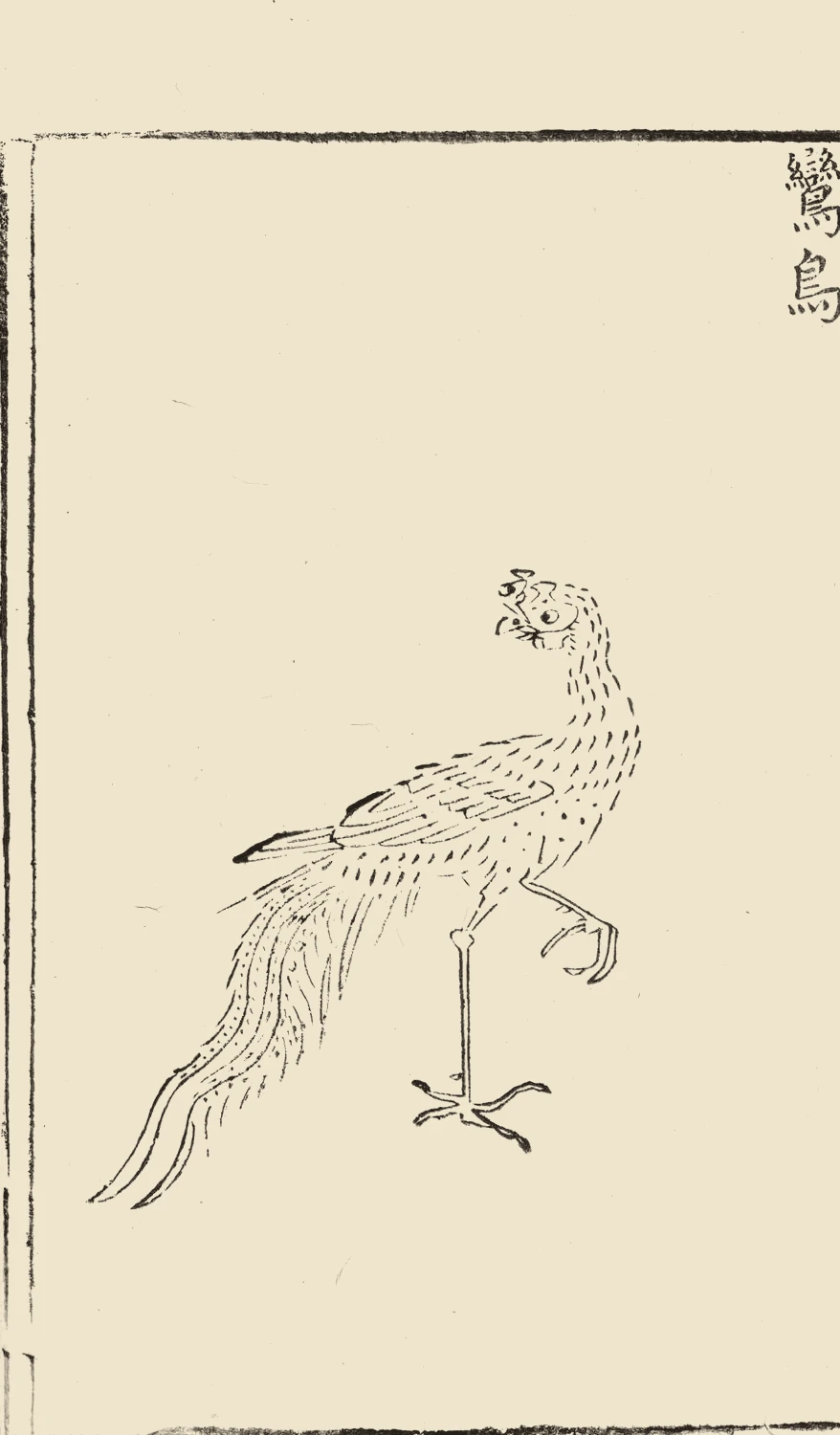
Standing Luan bird in Ming dynasty woodblock edition明代格致丛书本题为鸾鸟 — Same pose as the 1726 print: one leg raised, head turned back与1726年版画姿势相同:一只脚抬起,回头

Luan Niao Tu 鸞鳥圖, the divine bird of Mount Nüchuang. Gujin Tushu Jicheng 古今圖書集成, Animal Kingdom, woodblock print, 1726清·陈梦雷等编《古今图书集成·禽虫典》“鸾鸟图”,雍正四年(1726)铜活字印本 · Public domain公有领域Hu Wenhuan, Newly Carved Classic of Mountains and Seas, 1593, juan 2, PDF page 101, inscribed 'Luan Niao'明·胡文焕《新刻山海经图》卷下(PDF第101页),万历二十一年(1593)格致丛书本,题“鸾鸟” · Hu Wenhuan 胡文煥 (ed.)胡文焕 编, 15931593年

Highlighted words: anatomy part · feature · form type — tap to jump标色词:形态部位 · 特征 · 形态类别,点击可跳转

The texts原文

Original Text & Translation原文与译文

山海經·西山經 · Shan Hai Jing · Wikisource

西南三百里,曰女牀之山,其陽多赤銅,其陰多石涅,其獸多虎豹犀兕。有鳥焉,其狀如翟而五采文,名曰鸞鳥,見則天下安寧。
Three hundred li to the southwest lies Mount Nüchuang. Its sunny southern slope has abundant red copper, and its shady northern slope has abundant graphite; its beasts are mostly tigers, leopards, rhinos, and wild oxen. There is a bird here whose form resembles a long-tailed pheasant with five-coloured patterns, named the Luan bird; when it is seen, peace prevails beneath heaven.

說文解字·鳥部 · Shuowen Jiezi · Wikisource

鸞:亦神靈之精也。赤色,五采,雞形。鳴中五音,頌聲作則至。从鳥䜌聲。周成王時氐羌獻鸞鳥。
The Luan is also the essence of divine spirits. It is red in colour, with five-coloured plumage, and has the form of a fowl. Its calls harmonize with the five musical tones; when songs of praise arise, it arrives. Derived from bird with the phonetic luan. In the reign of King Cheng of Zhou, the Di and Qiang tribes presented a Luan bird as tribute.

Comparing the Books典籍对比

The Shan Hai Jing describes a pheasant-like bird with five-coloured patterns whose appearance means peace; the Shuowen Jiezi adds that it is red, fowl-shaped and sings the five notes.
The story来历与故事

The divine bird of Mount Nüchuang in the Shan Hai Jing: shaped like a long-tailed pheasant with five-coloured patterns; when it is seen, there is peace.

The Divine Bird of Mount Nüchuang女牀之鸟:五采灵禽

Mount Nüchuang is home to the five-coloured Luan bird, resembling a pheasant.《西山经》记载女牀之山栖息着状如山雉、身具五彩的鸾鸟。

In the Classic of Mountains and Seas, Mount Nüchuang lies three hundred li to the southwest, rich in red copper and minerals.

A divine bird dwells upon the mountain, shaped like a long-tailed pheasant with five-coloured patterns, named the Luan.

Hu Wenhuan, Newly Carved Classic of Mountains and Seas, 1593, juan 2, PDF page 101, inscribed 'Luan Niao'
Hu Wenhuan, Newly Carved Classic of Mountains and Seas, 1593, juan 2, PDF page 101, inscribed 'Luan Niao'明·胡文焕《新刻山海经图》卷下(PDF第101页),万历二十一年(1593)格致丛书本,题“鸾鸟”

Herald of Harmony and Peace五音和鸣:天下安宁

The Luan harmonizes with five tones and heralds peace beneath heaven.《说文》说鸾鸟“鸣中五音”,《山海经》说它“见则天下安宁”。

The classical text records that when the Luan is seen, there is peace under heaven.

The Shuowen Jiezi adds that the Luan embodies divine spirit, is red in colour, and its calls harmonize with the five musical tones.

Classical Iconography and Image Traditions典籍图谱:两幅立鸾

Both the Gujin Tushu Jicheng and Hu Wenhuan's print show the Luan standing.《古今图书集成》和胡文焕本都把鸾鸟画成站立的长尾鸟。

The Gujin Tushu Jicheng print, titled Luan Niao Tu, shows a long-tailed bird with a small crest standing on one leg.

Its head is turned back, one foot is raised, and its long tail sweeps to the lower left.

Hu Wenhuan's 1593 edition also shows a long-tailed bird standing, inscribed Luan Niao.

Record档案

Record Card档案卡

TypeDivine Bird (five-patterned pheasant-like bird of Mount Nüchuang)
Also known asLuan bird 鸞鳥
Earliest sourceShan Hai Jing 山海經 (Classic of the Mountains and Seas, c. 4th–2nd c. BCE)
DwellingMount Nüchuang (女牀之山)
OmenPeace under heaven when it is seen (見則天下安寧)
Earliest source山海經·西山經
Source books山海經·西山經
說文解字·鳥部
Image sourceChen Menglei 陳夢雷 (ed.) · Wikimedia Commons
LicensePublic domain

Frequently Asked Questions

What does the Luan bird look like in classical texts?

The Shan Hai Jing states that it resembles a long-tailed pheasant with five-coloured patterns, and the Shuowen describes it as red and chicken-shaped.

What omen is associated with the Luan bird?

The Shan Hai Jing says that when it is seen, there is peace under heaven; the Shuowen adds that it comes when songs of praise arise.

Where does the Luan live?

The Western Mountains text places it on Mount Nüchuang, whose sunny side has much red copper and whose beasts are mostly tigers, leopards and rhinoceroses.