Dāngkāng

当康Dangkang

The tusked piglet-like beast of Mount Qin from the Shan Hai Jing: it calls its own name, and when it is seen there is a great harvest.《山海经》记载钦山之中兆丰年之瑞兽当康:其状如豚而有牙,其鸣自叫,见则天下大穰。

Body身形

Like a piglet样子像小猪

其狀如豚

Tusks獠牙

Has tusks长着獠牙

而有牙

Call叫声

Calls its own name叫声就是自己的名字

其鳴自叫

Omen祥瑞

Bountiful harvest出现则天下大丰收

見則天下大穰

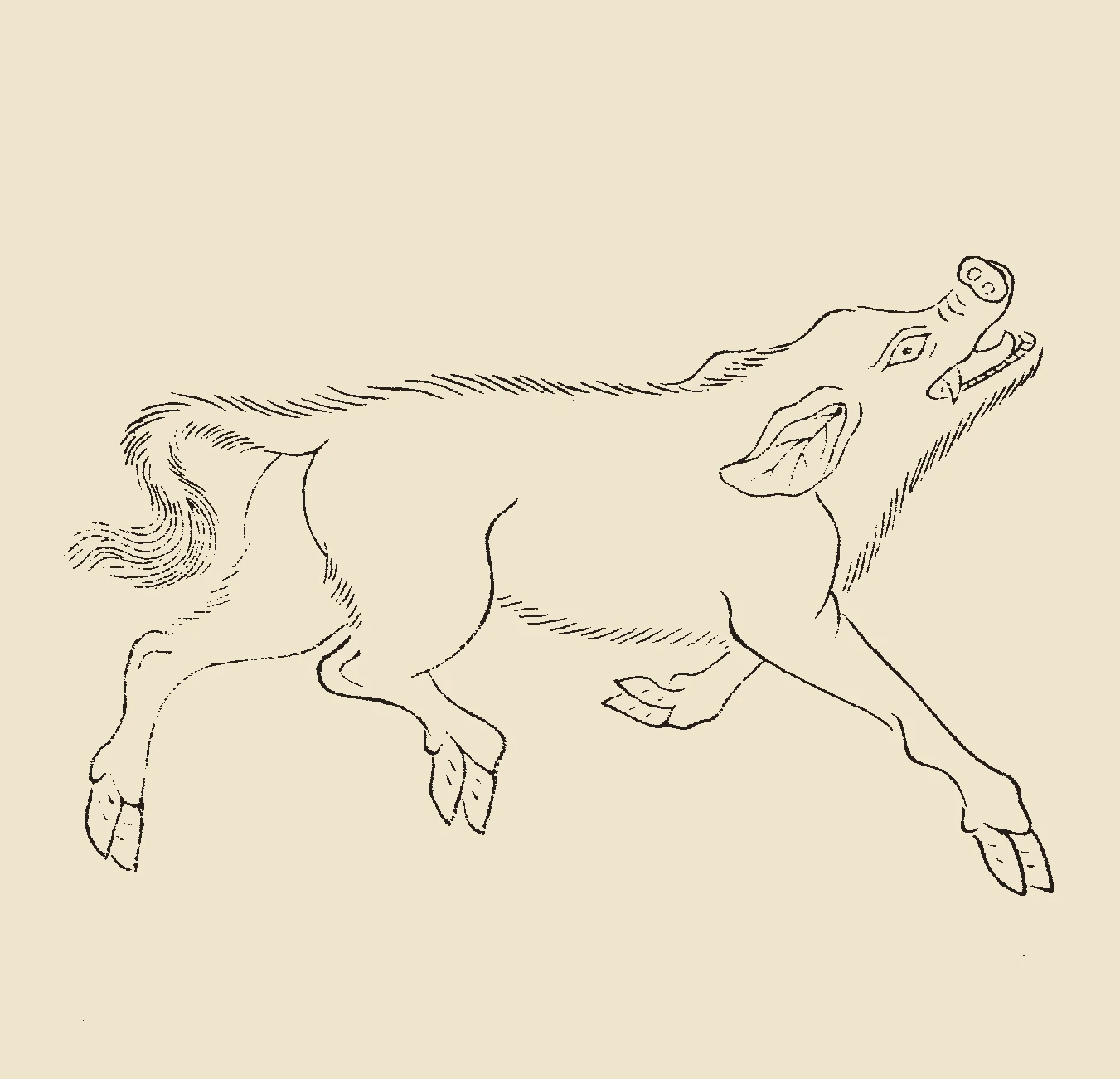
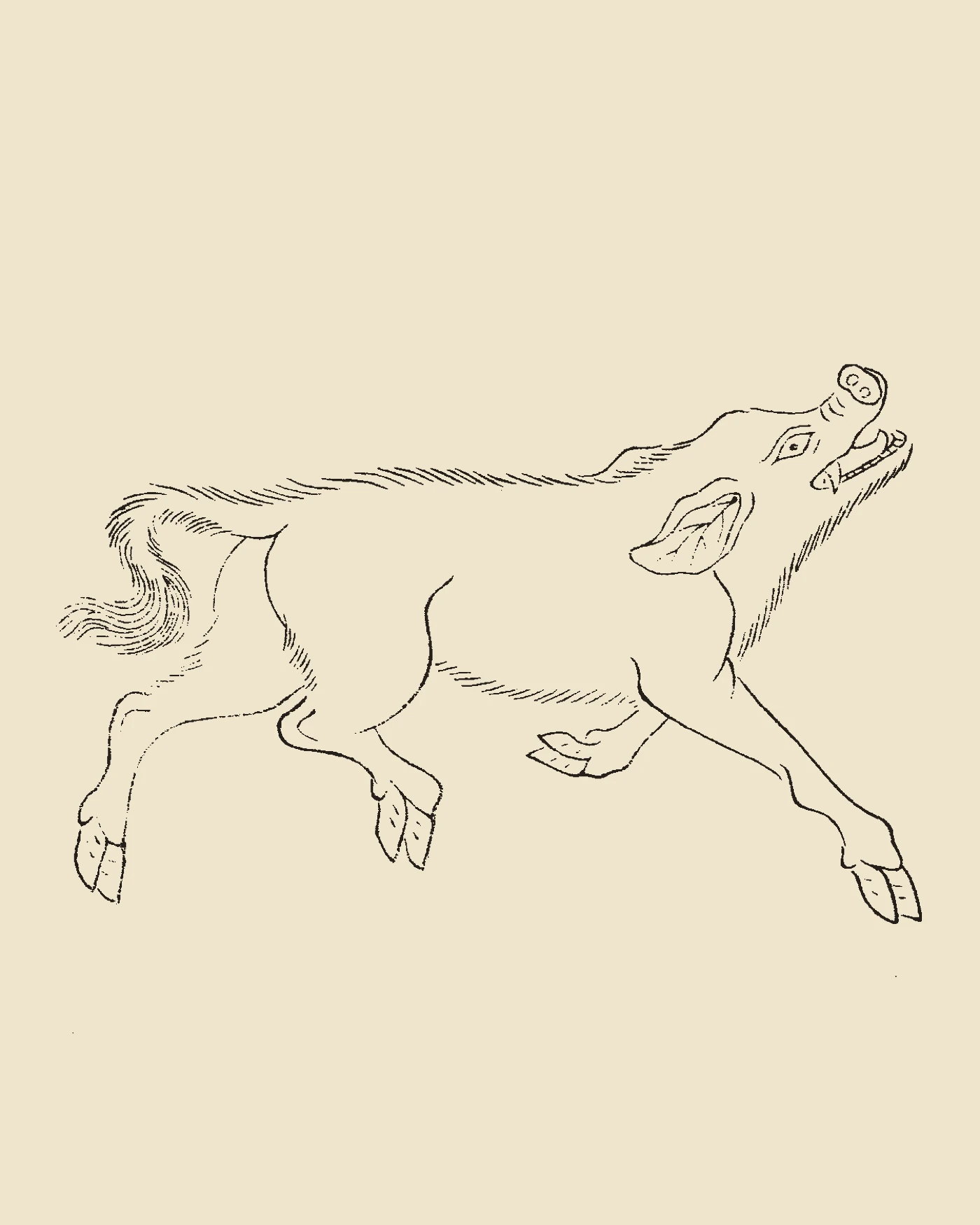
Woodblock print from Gujin Tushu Jicheng showing Dangkang, a tusked wild boar running而有牙Tusks嘴边的牙而有牙Tusks嘴边的牙其狀如豚Boar head形貌宛若小猪其狀如豚Boar head形貌宛若小猪野猪之躯Boar torso野猪般的身子野猪之躯Boar torso野猪般的身子四足奔走Running legs四条腿奔跑四足奔走Running legs四条腿奔跑
有獸焉,其名曰當康

There is a beast here; its name is Dangkang.

山海經·東山經
Dangkang Tu 當康圖, the auspicious tusked boar. Gujin Tushu Jicheng 古今圖書集成, Animal Kingdom, woodblock print, 1726清·陈梦雷等编《古今图书集成·禽虫典》“当康图”,雍正四年(1726)铜活字印本 · Public domain公有领域

Highlighted words: anatomy part · feature · form type — tap to jump标色词:形态部位 · 特征 · 形态类别,点击可跳转

The texts原文

Original Text & Translation原文与译文

山海經·東山經 · Shan Hai Jing · Wikisource

有獸焉,其狀如豚而有牙,其名曰當康,其鳴自叫,見則天下大穰。
There is a beast here whose form resembles a piglet yet has tusks; its name is Dangkang. Its cry is a call of its own name, and when seen, there will be a bountiful harvest across the realm.

Comparing the Books典籍对比

The Shan Hai Jing gives one short entry: a tusked, piglet-like beast that calls its own name and whose appearance means a great harvest. The 1726 print draws a running boar.
The story来历与故事

The auspicious beast of Mount Qin in the Shan Hai Jing: like a piglet but with tusks, it calls its own name, and when it is seen there is a great harvest under heaven.

The Auspicious Beast of Mount Qin钦山异兽:其名当康

Dangkang is an auspicious beast dwelling upon Mount Qin.《东山经》记载当康在多金玉而无石的钦山。

In the Classic of the Eastern Mountains, Dangkang lives on Mount Qin, two hundred li southeast of the previous mountain.

Mount Qin is rich in gold and jade without stone, where the Shi River flows north into the Gao Marsh.

Tusks, Self-Naming Call, and Bountiful Harvest獠牙自鸣:天下大穰

It resembles a piglet with tusks and foretells a bumper harvest.经文记其状如豚而有牙,其鸣自叫,见则天下大穰。

The text describes Dangkang as resembling a piglet but with tusks.

Its cry sounds like calling its own name, and its appearance foretells an abundant harvest across the realm.

The Gujin Tushu Jicheng Print清代图谱:奔跑的野猪

The Gujin Tushu Jicheng draws it as a running boar with tusks.《古今图书集成》画它为一头有獠牙、正在奔跑的野猪。

The Gujin Tushu Jicheng print draws Dangkang as a running wild boar on a plain background.

Its snout is raised, a tusk shows at the mouth, and all four hooves are off the ground.

Record档案

Record Card档案卡

TypeAuspicious Beast (harvest-bringing tusked boar of Mount Qin)
Also known asDangkang 當康
Earliest sourceShan Hai Jing 山海經 (Classic of the Eastern Mountains, c. 4th–2nd c. BCE)
DwellingMount Qin (欽山), where the Shi River flows into the Gao Marsh
CallCalls its own name (其鳴自叫)
OmenBountiful harvest across the realm (見則天下大穰)
Earliest source山海經·東山經
Source books山海經·東山經
Image sourceChen Menglei 陳夢雷 (ed.) · Wikimedia Commons
LicensePublic domain

Frequently Asked Questions

What omen does Dangkang bring?

The Shan Hai Jing says that when Dangkang is seen, there is a great harvest under heaven.

How is Dangkang described in the Shan Hai Jing?

The Classic of the Eastern Mountains describes it as pig-like with tusks, calling its own name.

Where does Dangkang dwell in the classical landscape?

It lives on Mount Qin, which has much gold and jade and no stone, and where the Shi River rises.