The omniscient white beast of the Eastern Sea that speaks human tongue and reveals all 11,520 spirits.东海巡狩所获神兽,能言语、达万物之情,口述天下万一千五百二十种精怪以绝妖祟。
Voice言语
Speaks like a human会说人话
能言
Knowledge见识
Knows the nature of all things通晓万物的情理
達於萬物之情
Role职能
Warns people, removes harm告诫百姓,为民除害
以戒於民,為時除害
Omen祥瑞
Appears under wise rulers君主贤明时出现
賢君明德幽遠則来
白澤
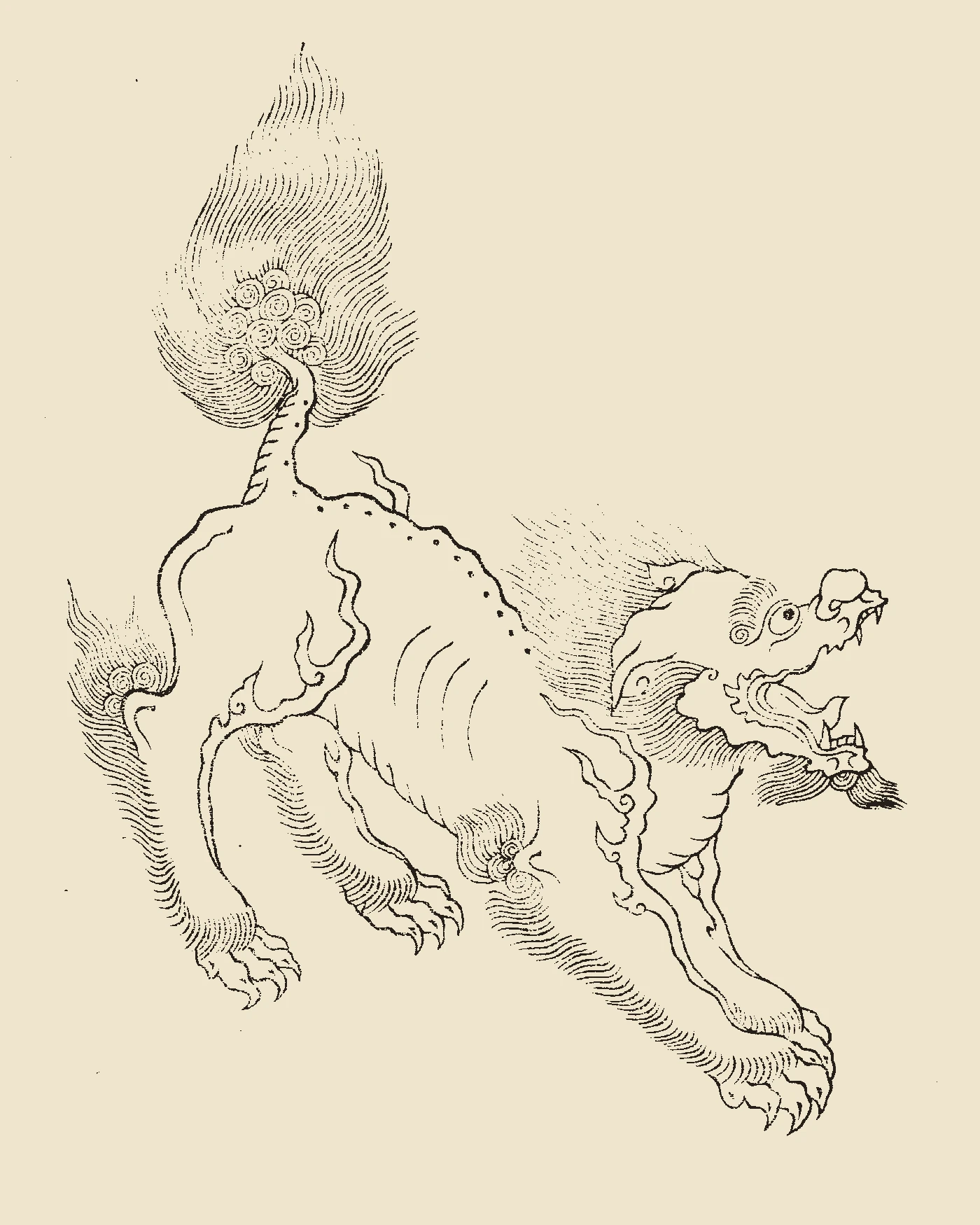
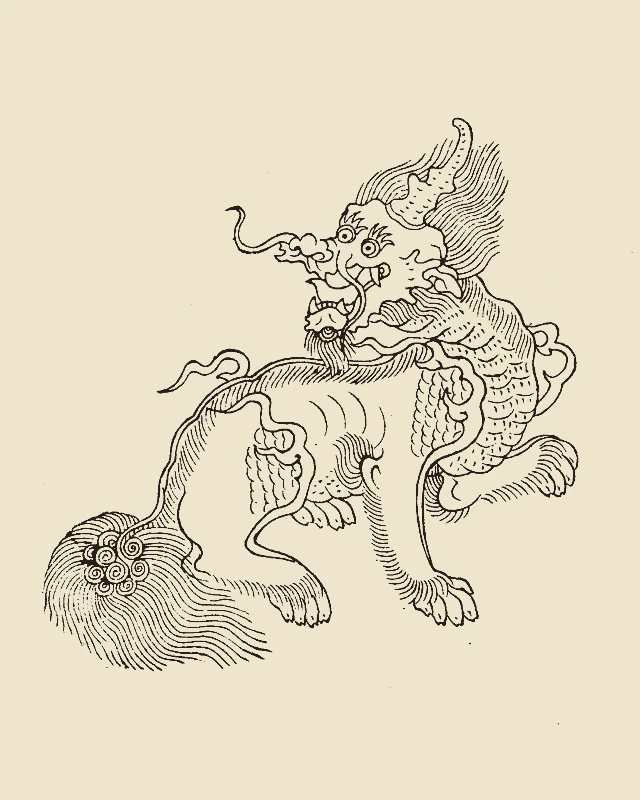
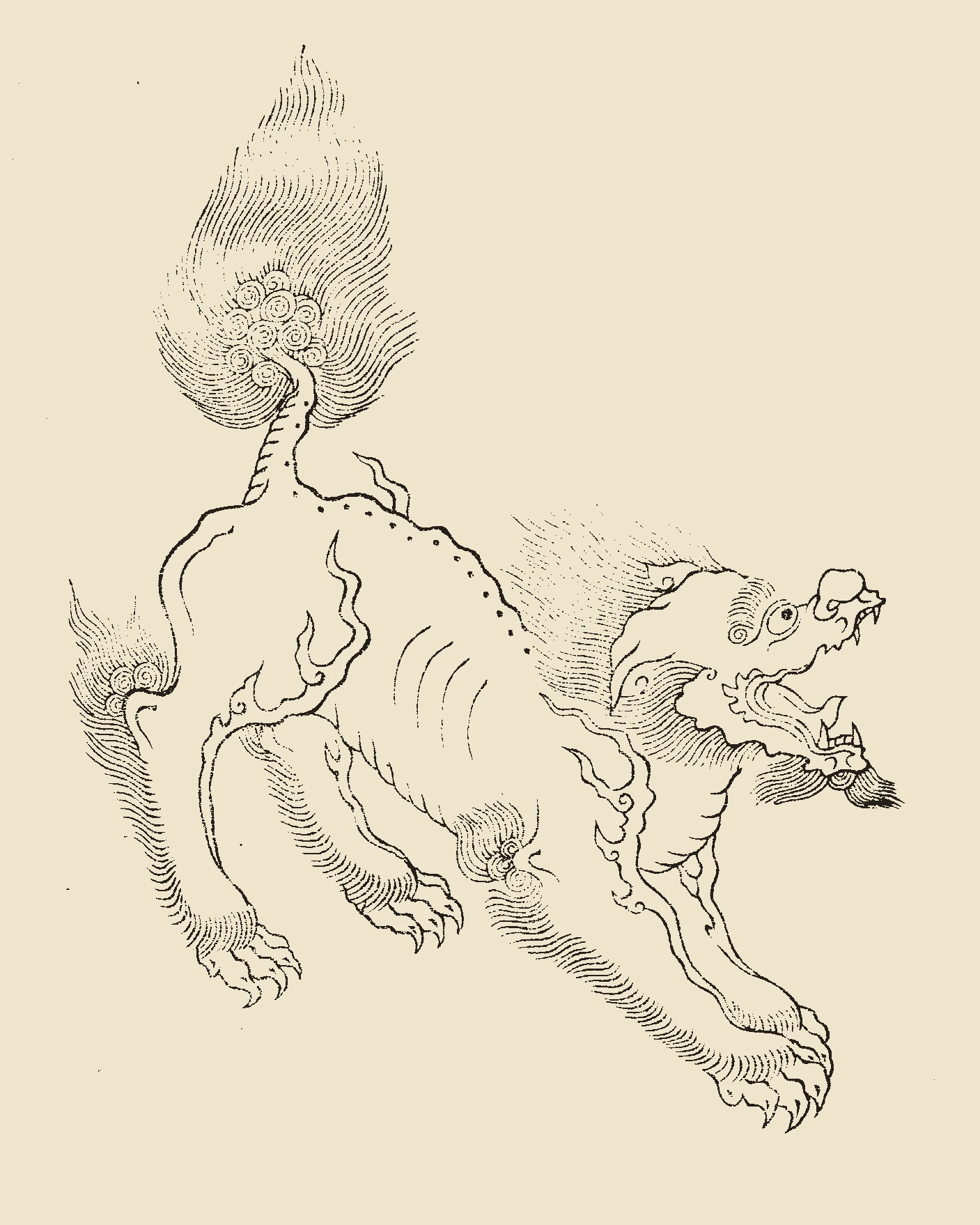
Gujin Tushu Jicheng’s 1726 imperial woodblock print of the Baize, illustrating the classical leonine form of the beast that enlightened the Yellow Emperor.清代《古今图书集成》中的白泽图,呈现向黄帝口述万物精怪的祥瑞神兽原本形貌。
白澤言之,帝以圖寫之
Baize described them all, and the Emperor had them drawn as pictures.
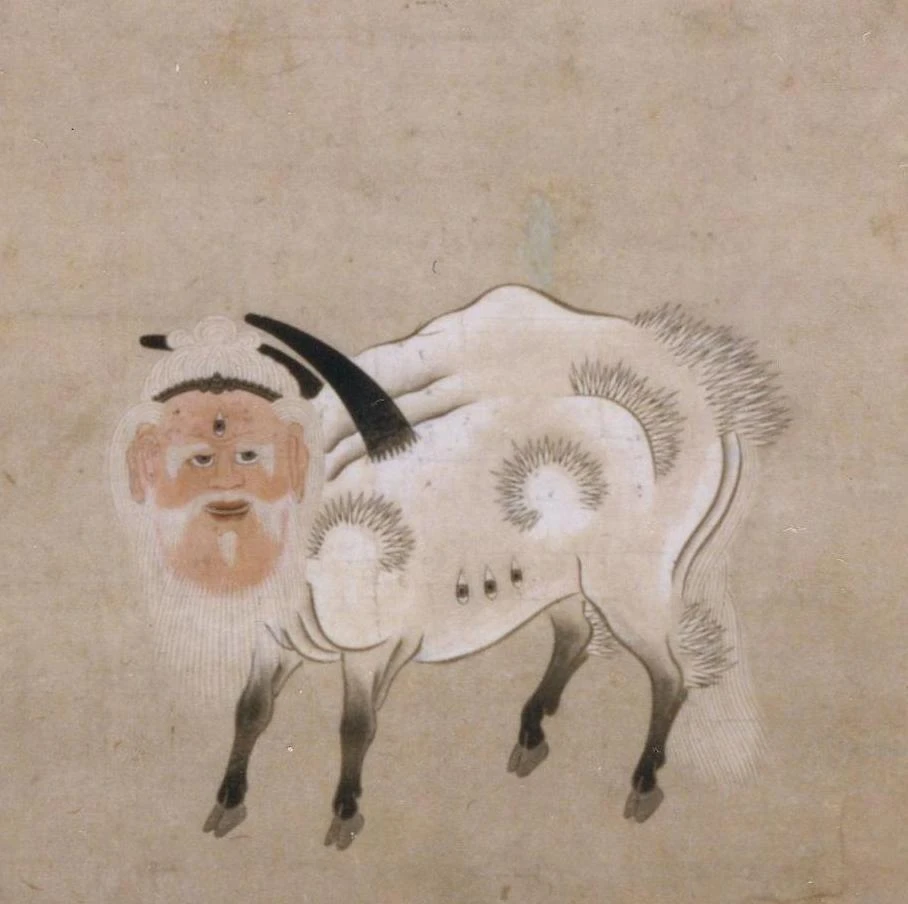
Gusukuma Seihō: nine-eyed beast with human face and goat body城间清丰:人面、九目、山羊身的辟邪神兽 — Bearded human face, three horns, nine eyes and cloven hooves; a white goat-like body长须人面,头生三角,通体九目,偶蹄,羊身雪白
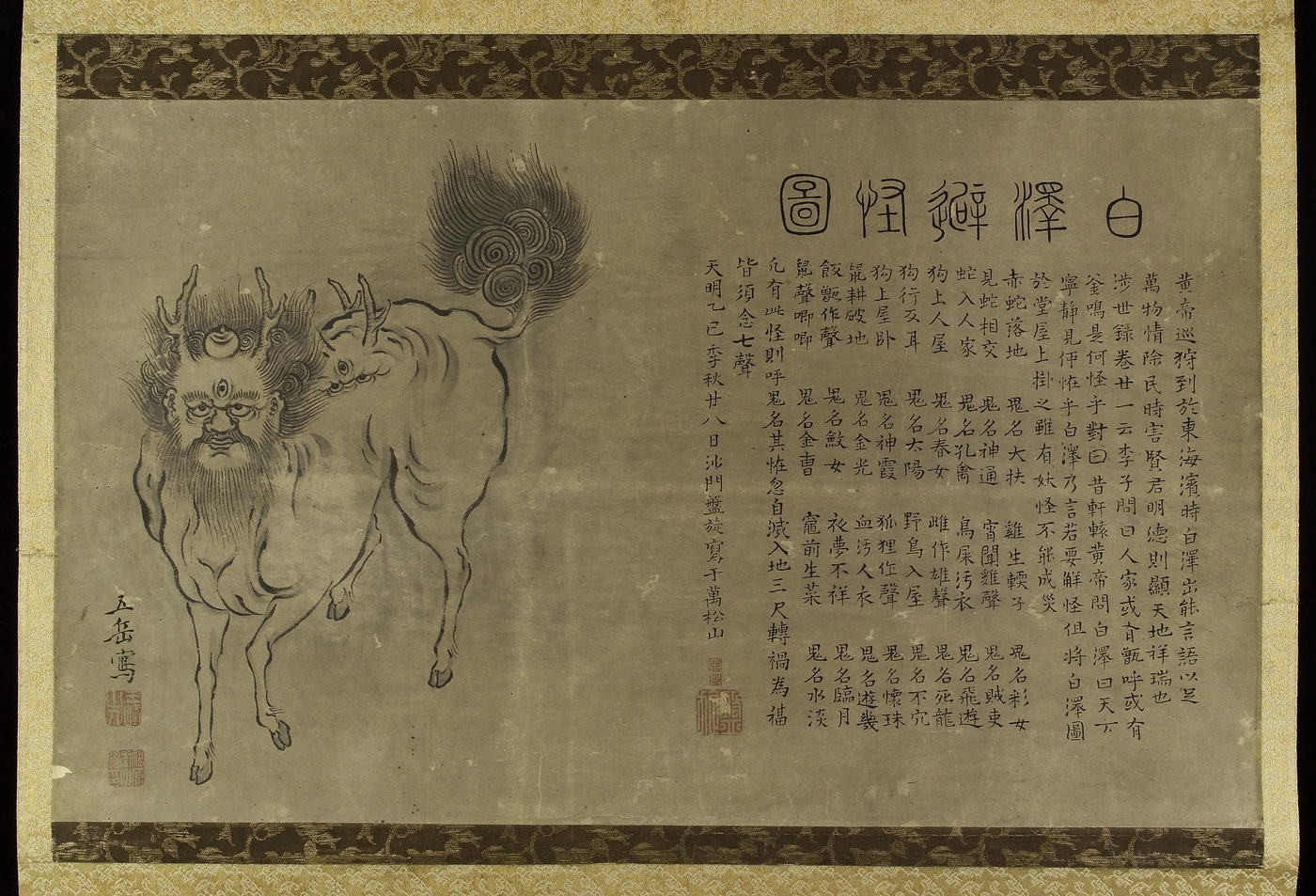
Fukuhara Gogaku: multi-eyed beast beside an exorcistic text福原五岳:书有辟邪祝词的多目神兽立轴 — Upright, with a third eye on the brow, antler-like horns and extra eyes on the haunches身躯直立,额生立目,角如鹿角,后胯另有三目
Baize 白澤, the omniscient beast that revealed all supernatural beings. Gujin Tushu Jicheng 古今圖書集成, Qin Chong Dian, woodblock print, 1726清·陈梦雷等编《古今图书集成·禽虫典》“白泽图”,雍正四年(1726)铜活字印本 · Public domain公有领域Gusukuma Seihō 城間清豊, Portrait of the Sacred Beast Baize (白澤之圖), hanging scroll, c. 1630s, Ryukyu Kingdom. Important Cultural Property of Japan琉球国·城间清丰《白泽之图》,约1630年代,冲绳县立博物馆·美术馆藏,日本重要文化财 · Gusukuma Seihō 城間清豊 (1591–1644)城间清丰(1591–1644), c. 1630s约1630年代Fukuhara Gogaku 福原五岳, Hakutaku Warding Evil Spirits (白澤避怪圖), ink and light colour on silk, 1785 (Tenmei 5), Wellcome Collection, London日本·福原五岳《白泽避怪图》,天明五年(1785),英国惠康收藏馆藏 · Fukuhara Gogaku 福原五岳 (1730–1799)福原五岳(1730–1799), 17851785年
Highlighted words: anatomy part · feature · form type — tap to jump标色词:形态部位 · 特征 · 形态类别,点击可跳转
The Yellow Emperor was on an imperial tour of inspection: travelling east to the sea, he ascended Mount Heng. At the seashore he encountered the divine beast Baize, which was able to speak human words and understood the true nature of all things in creation. The Emperor asked it about all the ghosts, spirits, and supernatural beings of the realm—those born from vital essences or wandering souls since ancient times, numbering 11,520 kinds in all. The Baize described each in turn, and the Emperor ordered pictures made of them to display throughout the world, composing incantations to exorcise evil.
The Marsh Beast: during the reign of the Yellow Emperor, as he made an imperial inspection tour to the eastern seashore, the Marsh Beast emerged. It was capable of speech and understood the inner essences of all things. It appeared to admonish and instruct the people, eliminating calamities for their era. Only when a virtuous ruler's moral influence reaches far and deep will it arrive.
Comparing the Books典籍对比
The Song Shu treats the beast as an auspicious omen of enlightened rule, calling it Ze Shou and emphasizing its moral instruction to the people. The Xuan Yuan Huang Di Zhuan elaborates the foundational mythology: Baize reveals the names and shapes of all 11,520 spirits under heaven, leading to the creation of the Baize Tu and the earliest Chinese tradition of monster-warding art.
The story来历与故事
The omniscient chimera of ancient Chinese legend: a horned, lion-like beast that encountered the Yellow Emperor at the seashore and spoke human language. Knowing the names, shapes, and remedies for all 11,520 supernatural beings in creation, its words formed the mythical Baize Tu (白泽图), the foundational compendium of monster-warding folklore across East Asia.
The Omniscient Beast of Mount Heng恒山之滨通晓万物的神兽
Encountered by the Yellow Emperor at the seashore, it spoke human language and revealed 11,520 spirits.黄帝巡狩登恒山于海滨遇之,能言人语,口述天下万一千五百二十种精怪。
In the foundational narrative preserved in the Xuan Yuan Huang Di Zhuan and the Song Shu, the Yellow Emperor travelled to the eastern seashore and ascended Mount Heng (桓山), where he encountered an extraordinary divine creature. Unlike wild beasts that fled or attacked, this beast possessed the gift of human speech (能言) and comprehended the hidden essences of all things in heaven and earth. Shen Yue's fifth-century official history, the Song Shu, records it under the name Ze Shou (澤獸, Marsh Beast), emphasizing that it appeared only when an enlightened ruler governed with profound virtue, arriving to instruct the people and eliminate disasters from the world.
When the Yellow Emperor inquired about the unseen spirits of the world, Baize revealed the names, forms, and weaknesses of every supernatural entity born since ancient times—numbering 11,520 kinds in all. The fourth-century Daoist master Ge Hong recorded in the Baopuzi that the Emperor 'exhausted the knowledge of divine evils by recording the words of Baize' (窮神奸則記白澤之辭). In ancient Chinese demonology, supernatural spirits derived their malice from obscurity and deceit; by naming every phantom and detailing its weaknesses, Baize transformed knowledge into humanity’s ultimate weapon against chaos.
Gusukuma Seihō 城間清豊, Portrait of the Sacred Beast Baize (白澤之圖), hanging scroll, c. 1630s, Ryukyu Kingdom. Important Cultural Property of Japan琉球国·城间清丰《白泽之图》,约1630年代,冲绳县立博物馆·美术馆藏,日本重要文化财
The Lost Baize Tu and Dunhuang Scrolls失传的《白泽图》与敦煌遗卷
The Emperor ordered pictures made of every demon, preserved in ancient warding scrolls like Dunhuang P.2682.帝令以图写之以示天下,成为后世辟邪古卷之祖,残卷重见于莫高窟藏经洞。
Astonished by the creature's revelation, the Yellow Emperor ordered his court scribes and painters to illustrate every spirit and transcribe the beast's remedies, producing the legendary Baize Tu (白澤圖, Illustration of Baize), accompanied by exorcistic incantations (祝邪之文). From the Han dynasty through the Tang dynasty, the Baize Tu became an indispensable handbook of household defense. Families painted its images on gates, embroidered its likeness on pillows, and hung its scrolls in halls, believing that no ghost or wicked spirit could enter a dwelling where Baize was displayed.
Although the imperial compendium vanished from Chinese court libraries following the Song dynasty, the reality of this ancient tradition was dramatically confirmed in the early twentieth century. Explorers in Cave 17 of the Dunhuang Mogao Grottos (the Library Cave) uncovered eighth-century Tang dynasty manuscript scrolls: Pelliot chinois 2682 (now in the Bibliothèque nationale de France) and Stein 6261 (now in the British Library), entitled Baize Jingguai Tu (白澤精恠圖). Containing hand-painted illustrations of uncanny creatures—such as domestic tools turning into spectres or two-headed birds calling men's names—alongside practical instructions for expelling them, these precious fragments proved that the legend of Baize had shaped daily spiritual life for over a thousand years.
Fukuhara Gogaku 福原五岳, Hakutaku Warding Evil Spirits (白澤避怪圖), ink and light colour on silk, 1785 (Tenmei 5), Wellcome Collection, London日本·福原五岳《白泽避怪图》,天明五年(1785),英国惠康收藏馆藏
From Chinese Chimera to Nine-Eyed Hakutaku从华夏神兽到东亚九目白泽
Edo Japan and Ryukyu transformed Baize into Hakutaku, adding three horns and nine eyes.流传至琉球与日本后演变为三目三角、身生九目的白泽避怪像,成为辟除疫疠的护身图。
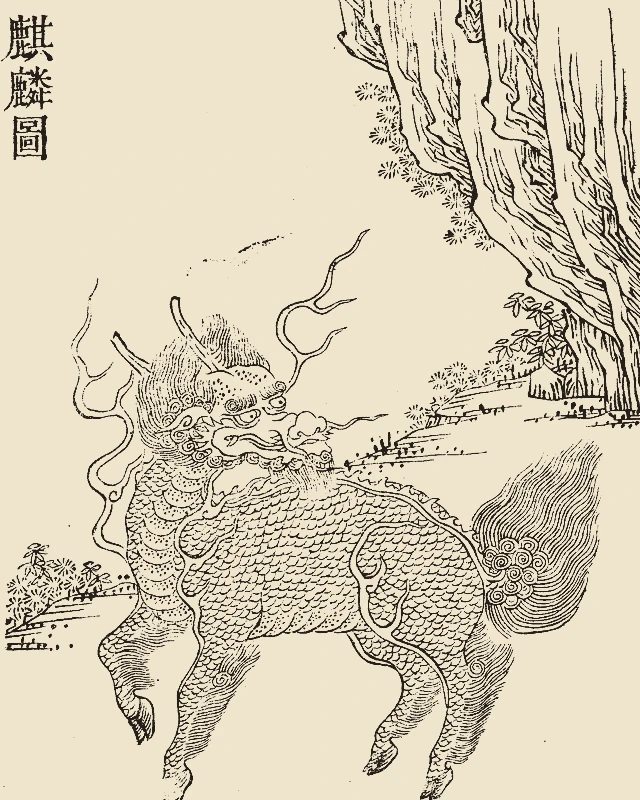
Ancient Chinese woodblock prints, epitomized by the imperial 1726 Gujin Tushu Jicheng, depict Baize as an imposing, lion-bodied celestial quadruped. It bears a single majestic crest horn upon its head, roaring jaws framed by a flowing beard, flame scrolls licking along its flanks, spine ridges bristling with power, sharp claws, and a tufted swirling tail held high. This iconography reflected its role as an imperial omen of royal authority, where leonine majesty and martial vigilance symbolized the sage sovereign’s ability to survey and protect the realm.
As Chinese lore traveled across maritime trade routes to the Ryukyu Kingdom and Edo-period Japan, where it was pronounced Hakutaku, the beast underwent a fascinating visual evolution. Masterpieces like the seventeenth-century hanging scroll by Ryukyuan court painter Gusukuma Seihō and ukiyo-e prints by Toriyama Sekien and Fukuhara Gogaku introduced a radical chimeric form: a human face with three horns, cloven hooves, and nine penetrating eyes (three on the head, including a vertical eye on the brow, and three along each flank). This multi-eyed manifestation captured the imagination of the Edo public, who wore Hakutaku charms during travel and pasted them over doors during cholera outbreaks as an invincible shield against epidemics.
From Ming Military Badges to Modern Folklore从明代白泽补子到当代流行文化
Embroidered on Ming imperial guard robes and modern folklore, Baize remains the ultimate guardian of knowledge.从大明锦衣卫指挥使补服到辟邪安眠之枕,白泽至今仍是洞察邪祟、护佑平安的智慧象征。
Throughout Chinese history, Baize was celebrated as a supreme emblem of discerning authority. In the Ming dynasty official dress code (Da Ming Huidian), the Baize rank badge (白澤補子) was reserved exclusively for high-ranking military commanders and officers of the Embroidered Uniform Guard (Jinyiwei), chosen because the omniscient beast could see through disguise, unmask traitors, and maintain imperial order. In vernacular medicine and sleep lore, sleeping upon a 'Baize pillow' was believed to prevent night terrors and demonic disturbances.
In contemporary popular culture, the omniscient beast continues to thrive in fantasy literature, manga, and gaming. In the celebrated anime and manga series Hozuki's Coolheadedness (鬼灯的冷彻), Hakutaku is reimagined as an ancient, womanizing Chinese herbalist living in Shangri-La, whose comedic personality balances his vast pharmacological and demonological expertise. Across modern bestiaries, role-playing games, and fantasy novels, Baize endures not merely as an ancient myth, but as the quintessential patron spirit of encyclopedic knowledge, discernment, and protection.
Record档案
Record Card档案卡
Type
Auspicious Beast (speaker of all spirits)
Also known as
Ze Shou 澤獸 (in the Song Shu); Hakutaku (Japanese); Baegtaek (Korean)
Earliest source
Song Shu 宋書 (Treatise on Auspicious Signs, 5th c.) & Xuan Yuan Huang Di Zhuan 軒轅黃帝傳
Power
Omniscience of spirits: knows the nature, names, and remedies for all 11,520 supernatural beings under heaven
Symbolism
Symbol of the virtuous sovereign; painted on talismans and embroidered on Ming imperial guard badges to ward off evil
The Baize is a legendary omniscient divine beast in ancient Chinese myth. Encountered by the Yellow Emperor at the seashore, it possessed fluent human speech and understood the true nature, names, and remedies for all 11,520 supernatural beings and spirits in creation. It is revered as the ultimate symbol of enlightened rule, demonological knowledge, and talismanic protection.
What was the Baize Tu (白泽图) and does any copy survive?
The Baize Tu was an ancient demonological compendium ordered by the Yellow Emperor to illustrate every monster described by Baize, alongside exorcistic incantations. Widely used throughout the Han and Tang dynasties to protect homes, the imperial book was lost after the Song dynasty. However, genuine eighth-century manuscript fragments titled Baize Jingguai Tu were rediscovered in the Dunhuang Mogao Cave 17 (now preserved in Paris and London), confirming the historic reality and widespread daily practice of the tradition.
Why did the Japanese Hakutaku have nine eyes and three horns?
While ancient Chinese woodblock prints like the Gujin Tushu Jicheng portrayed Baize as a lion-like chimera with a single horn, East Asian maritime trade carried the lore to Ryukyu and Edo-period Japan (pronounced Hakutaku). There, artists like Gusukuma Seihō and Toriyama Sekien crystallized an iconic multi-eyed design: a human face, three horns, cloven hooves, and nine eyes (three on the head and three on each flank), symbolizing total omniscience. In Japan, images of Hakutaku were famously pasted on doors during epidemics to ward off plagues.
Why did Ming dynasty commanders wear Baize badges?
In the Ming dynasty official code (Da Ming Huidian), the Baize rank badge (白泽补子) was a prestigious privilege granted to high-ranking military commanders and officers of the Embroidered Uniform Guard (Jinyiwei). Because Baize was renowned for discerning truth, unmasking demons, and seeing through deception, wearing its image symbolized supreme loyalty, vigilance, and the imperial mandate to eliminate corruption and maintain order.