Bāshé

巴蛇Bashe

The colossal elephant-swallowing serpent from the Shan Hai Jing: patterned in four colours, it swallows an entire elephant and digests it for three years.《山海经》记载吞食大象的上古巨蛇:蛇体具青黄赤黑诸色,吞食大象后三年方吐出骨骼,君子服之无心腹之疾。

Prey吞食

Swallows elephants能吞下大象

巴蛇食象

Bone吐骨

Digests for three years经三年方吐出骨骼

三歲而出其骨

Colour鳞色

Four mingled colours青黄赤黑四色

其為蛇青黃赤黑

Cure药效

Wards off belly ills吃了不得心腹病

無心腹之疾

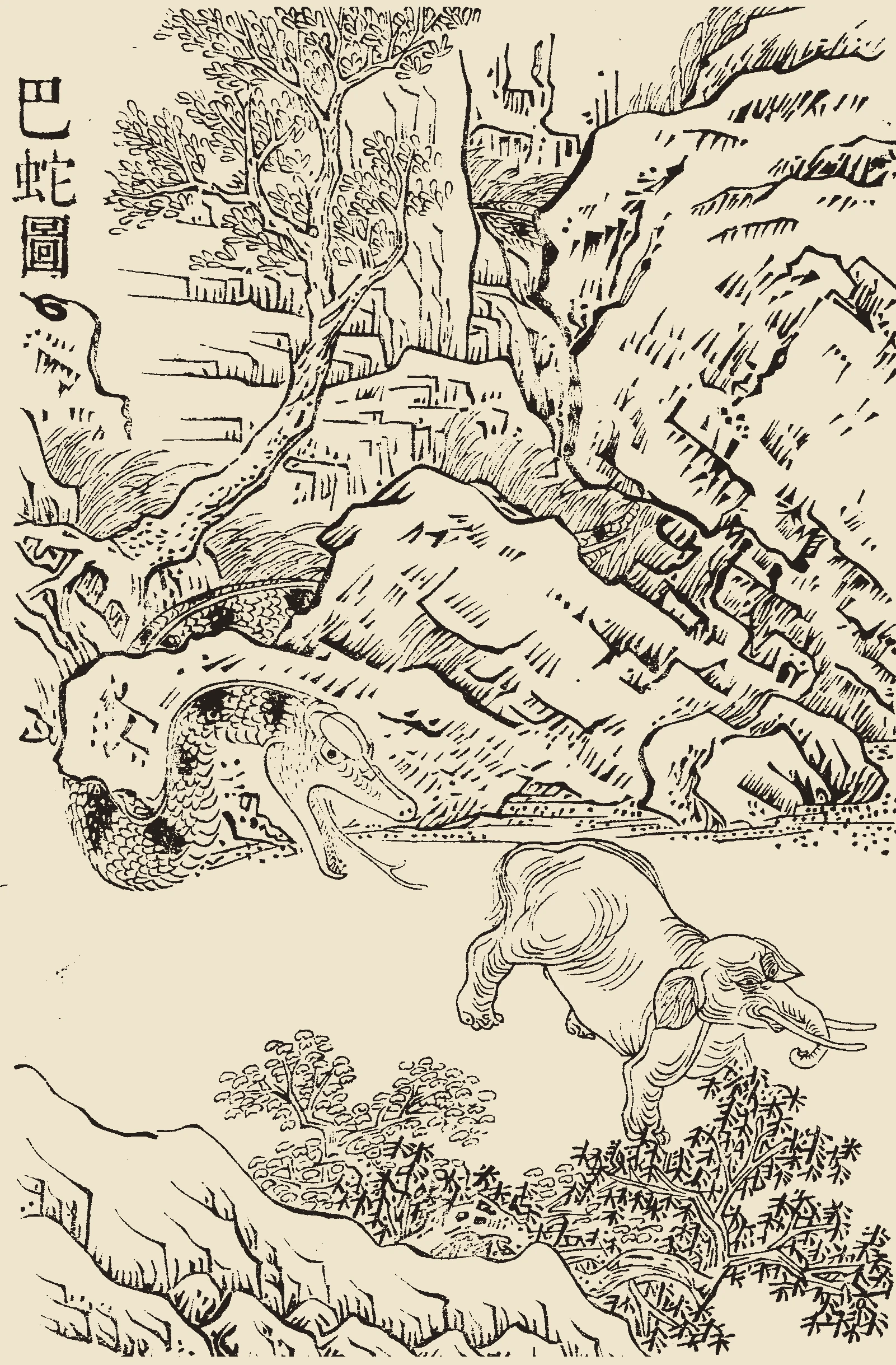
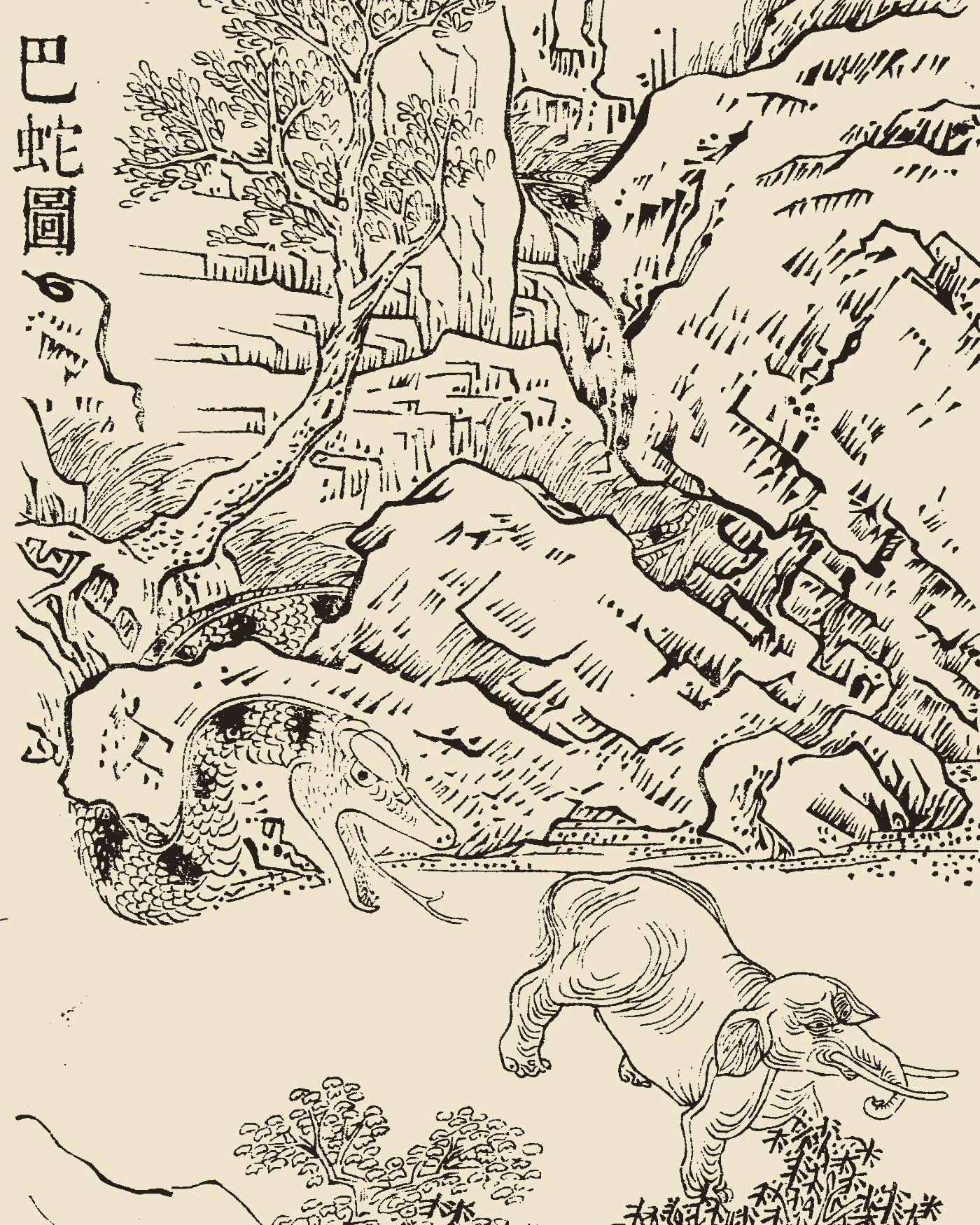
Woodblock print from Gujin Tushu Jicheng showing a colossal serpent swallowing an elephant, inscribed 'Bashe Tu'巨蟒之口Swallowing jaws巨蟒巨口张开巨蟒之口Swallowing jaws巨蟒巨口张开受吞大象Elephant prey整头大象受吞受吞大象Elephant prey整头大象受吞粗壮蛇躯Massive serpent body粗大盘屈蛇体粗壮蛇躯Massive serpent body粗大盘屈蛇体长尾缠绕Coiling tail尾端缠绕石隙长尾缠绕Coiling tail尾端缠绕石隙
一蛇吞象,厥大何如

A single snake swallows an elephant; how immense must it be?

楚辭·天問

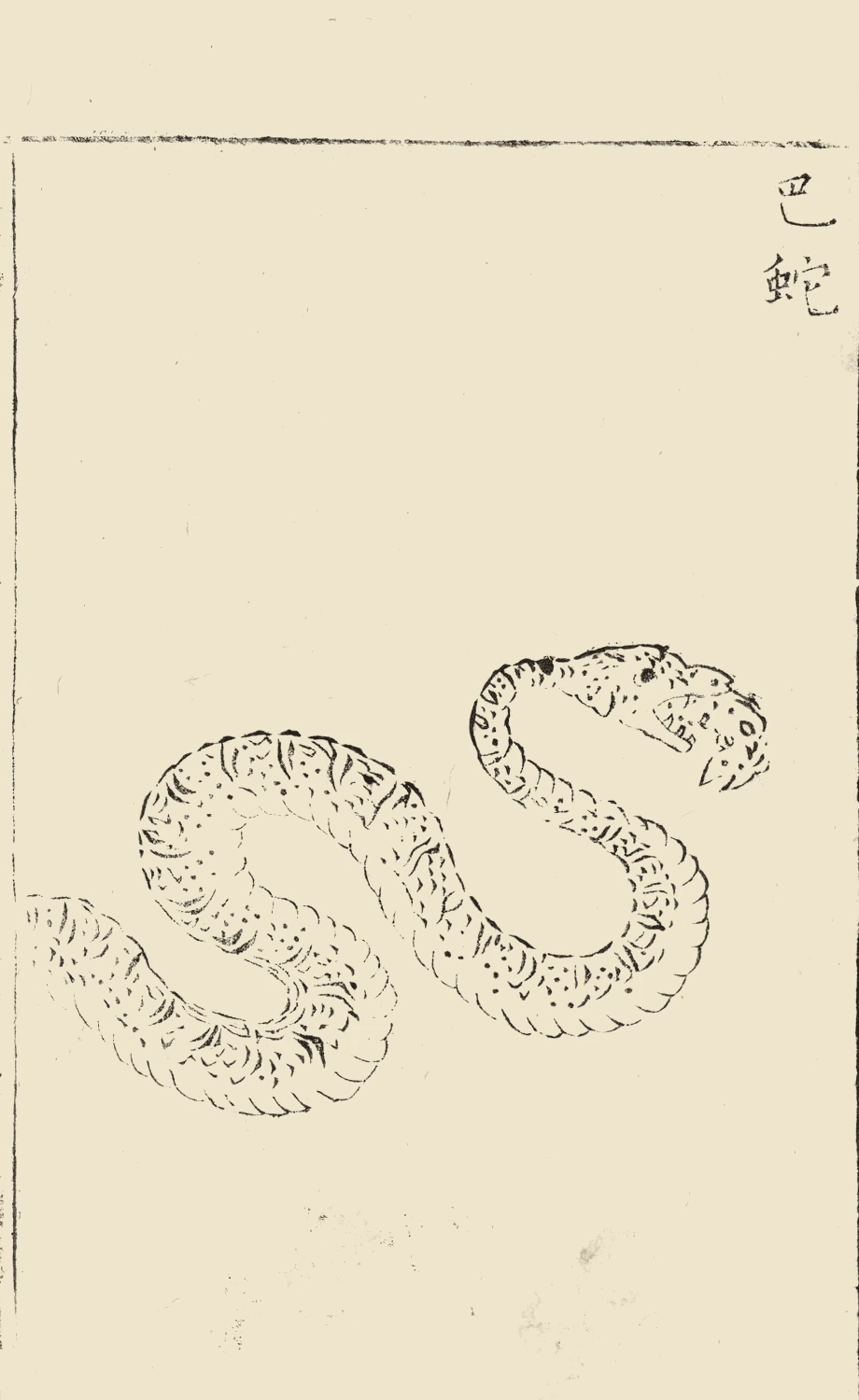
Coiled snake in Ming dynasty edition明代格致丛书本题为巴蛇 — A coiled spotted snake on its own, with no elephant只画一条盘曲的花蛇,没有大象

Bashe Tu 巴蛇圖, the great snake coiled around an elephant. Gujin Tushu Jicheng 古今圖書集成, Animal Kingdom, woodblock print, 1726清·陈梦雷等编《古今图书集成·禽虫典》“巴蛇图”,雍正四年(1726)铜活字印本 · Public domain公有领域Hu Wenhuan, Newly Carved Classic of Mountains and Seas, 1593, juan 1, PDF page 71, inscribed 'Bashe'明·胡文焕《新刻山海经图》卷上(PDF第71页),万历二十一年(1593)格致丛书本,题“巴蛇” · Hu Wenhuan 胡文煥 (ed.)胡文焕 编, 15931593年

Highlighted words: anatomy part · feature · form type — tap to jump标色词:形态部位 · 特征 · 形态类别,点击可跳转

The texts原文

Original Text & Translation原文与译文

山海經·海內南經 · Shan Hai Jing · Wikisource

巴蛇食象,三歲而出其骨,君子服之,無心腹之疾。其為蛇青黃赤黑。一曰黑蛇青首,在犀牛西。
The Ba snake eats elephants; after three years it expels their bones. When noble gentlemen ingest it, they suffer no ailments of the heart or belly. As a snake, it is blue-green, yellow, red, and black. Another account calls it a black snake with a blue-green head, dwelling west of the Rhinoceros.

楚辭·天問 · Chu Ci · Wikisource

一蛇吞象,厥大何如?
A single snake swallows an elephant; how immense must it be?

Comparing the Books典籍对比

The Shan Hai Jing says the Ba snake eats elephants and brings out the bones after three years. The Tianwen in the Chu Ci asks about a snake that swallows an elephant, but does not name it Bashe.
The story来历与故事

The colossal elephant-swallowing serpent in the Shan Hai Jing: patterned in four colours, it swallows an entire elephant and takes three years to expel its bones.

The Elephant-Swallowing Serpent海内巴蛇:吞象之兽

The Bashe is a colossal serpent that swallows whole elephants and digests them.《海内南经》记载巴蛇食象,历经三年始吐出骨骼。

In the Classic Within the Seas: South, the Bashe is a colossal serpent that swallows whole elephants.

After swallowing an elephant, three full years pass before the serpent regurgitates its digested bones.

Hu Wenhuan, Newly Carved Classic of Mountains and Seas, 1593, juan 1, PDF page 71, inscribed 'Bashe'
Hu Wenhuan, Newly Carved Classic of Mountains and Seas, 1593, juan 1, PDF page 71, inscribed 'Bashe'明·胡文焕《新刻山海经图》卷上(PDF第71页),万历二十一年(1593)格致丛书本,题“巴蛇”

Colours and Healing Virtues驳杂斑斓:除疾灵效

It is blue, yellow, red and black; gentlemen who take it have no heart or belly ailments.巴蛇青黄赤黑,“君子服之,无心腹之疾”;《天问》也问到一条能吞象的蛇。

The text records that the serpent's scales mingle four colours: blue-green, yellow, red, and black.

Gentlemen who take it suffer no illnesses of the heart or belly.

The Tianwen in the Chu Ci asks about a snake that swallows an elephant, without naming it Bashe: 'A single snake swallows an elephant; how immense must it be?'

Woodblock Depictions of the Swallowing Beast典籍版画:巨蟒吞象

The Gujin Tushu Jicheng shows the snake seizing an elephant; Hu Wenhuan draws a coiled snake alone.《古今图书集成》画大蛇咬住大象,明代胡文焕本只画一条盘曲的蛇。

The Gujin Tushu Jicheng print, titled Bashe Tu, shows a large snake among rocky crags with its body around an elephant.

In that print the elephant stands in the foreground while the snake's spotted coils lie among the rocks.

Hu Wenhuan's 1593 woodcut, inscribed Ba She, shows only a coiled, spotted snake.

Record档案

Record Card档案卡

TypeColossal Serpent (elephant-swallowing giant snake)
Also known asBa snake 巴蛇
Earliest sourceShan Hai Jing 山海經 (Classic Within the Seas: South, c. 4th–2nd c. BCE)
DwellingSouth of the Seas, west of the Rhinoceros (犀牛之西)
PreyWhole elephants, regurgitating their bones after three years
UseGentlemen who take it have no heart or belly ailments (君子服之,無心腹之疾)
Earliest source山海經·海內南經
Source books山海經·海內南經
楚辭·天問
Image sourceChen Menglei 陳夢雷 (ed.) · Wikimedia Commons
LicensePublic domain

Frequently Asked Questions

How does the Shan Hai Jing describe the Bashe?

It records that the Bashe swallows elephants, takes three years to expel the bones, and bears scales of blue, yellow, red, and black.

What medicinal or supernatural virtue was attributed to Bashe?

The classical text states that gentlemen who ingested it would suffer no illnesses of the heart or belly.

Does the Tianwen mention a snake that swallows an elephant?

Yes. The Tianwen asks 'A single snake swallows an elephant; how immense must it be?', but it does not use the name Bashe.