The venomous nine-headed serpent minister of the water god Gonggong, whose toxic breath turned lush lands into bitter marshes and who was slain by the Great Yu during the primordial deluge.华夏神话中上古水神共工座下极恶凶神,生有九颗人面之首与青鳞蛇躯,所过之处化为腥臭苦泽、百谷不生,后为大禹所诛灭。
Head头颅
Nine human-faced heads长着九张人脸面孔
九首人面
Body身躯
Blue-green serpent body青色的蛇身
蛇身而青
Coils盘绕
Body coiled in loops身躯盘屈自成环圈
自環
Master统属
Minister of Gonggong水神共工座下重臣
共工之臣
禹殺相柳,其血腥,不可以樹五穀種
Yu slew Xiangliu; his blood was rank and foul, and no seeds of the five grains could be planted there.
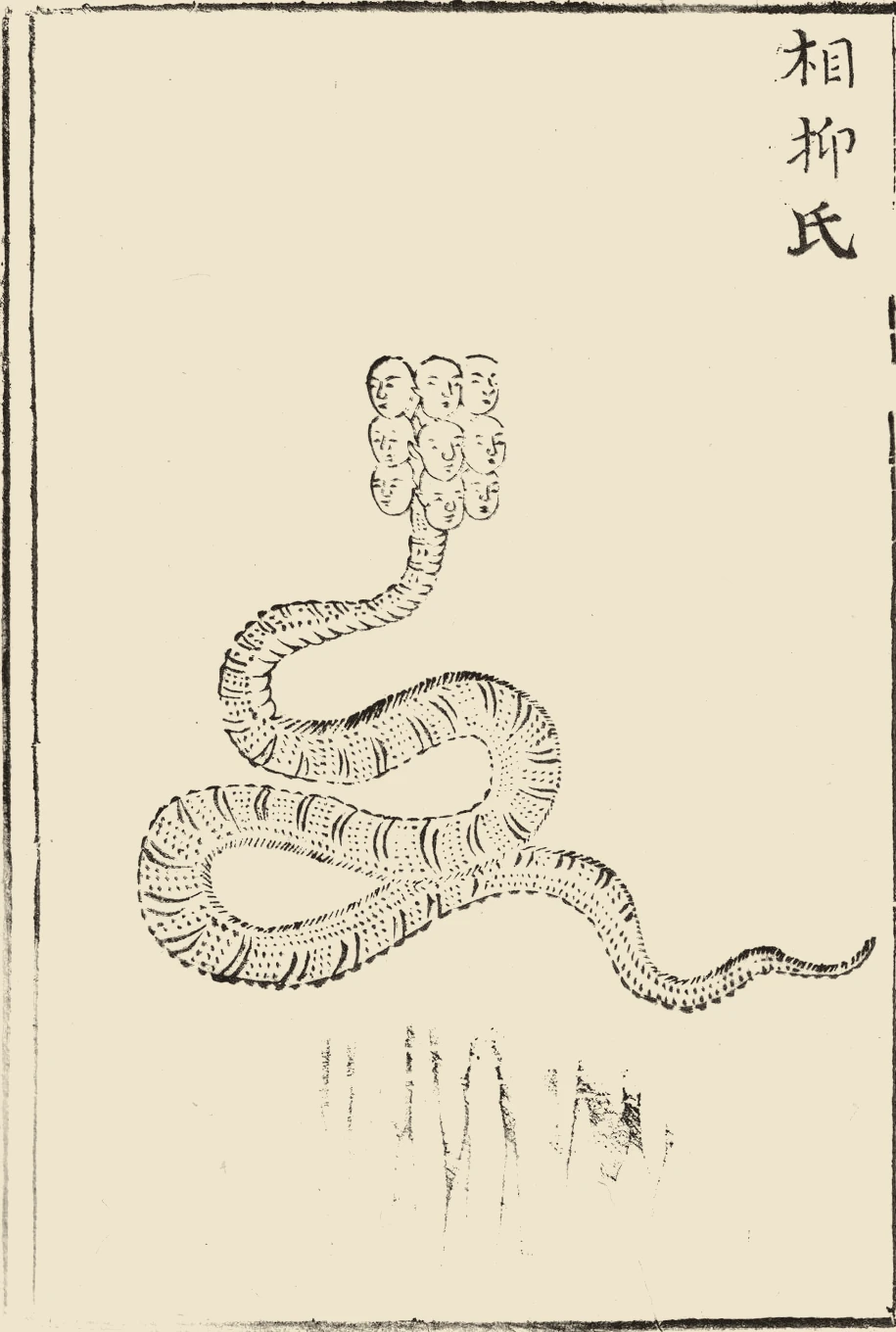
Hu Wenhuan's 1593 woodblock print of Xiangliu Shi明·胡文焕《新刻山海经图》中的相柳氏插图 — Ming woodblock print showing the coiled serpent with nine human heads明代格致丛书本版画,呈单条蛇身向上盘绕、九面攒聚之形
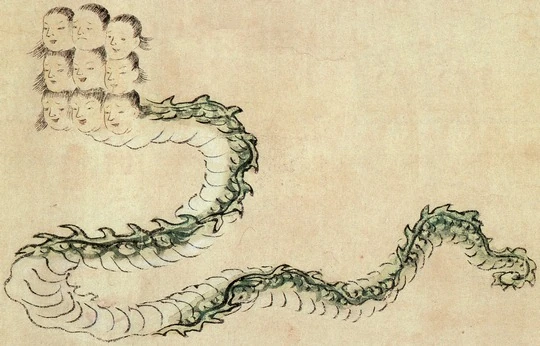
Edo-period painted scroll depiction from the Kaiki-chōjū日本江户时代《怪奇鸟兽图卷》设色画相柳 — Polychrome handscroll painting, horizontal elongated blue-scaled snake with human faces江户设色手卷,绘横向舒展的青鳞巨蛇与九颗人首
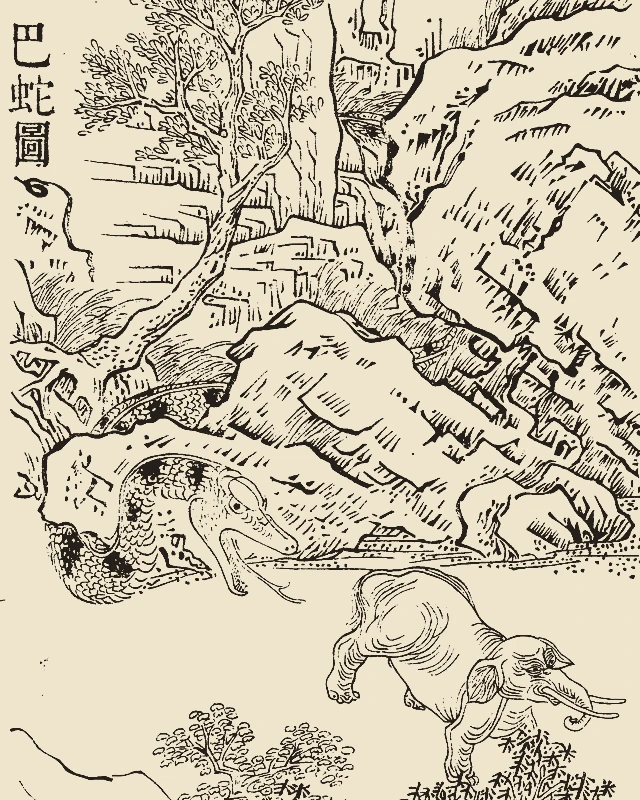
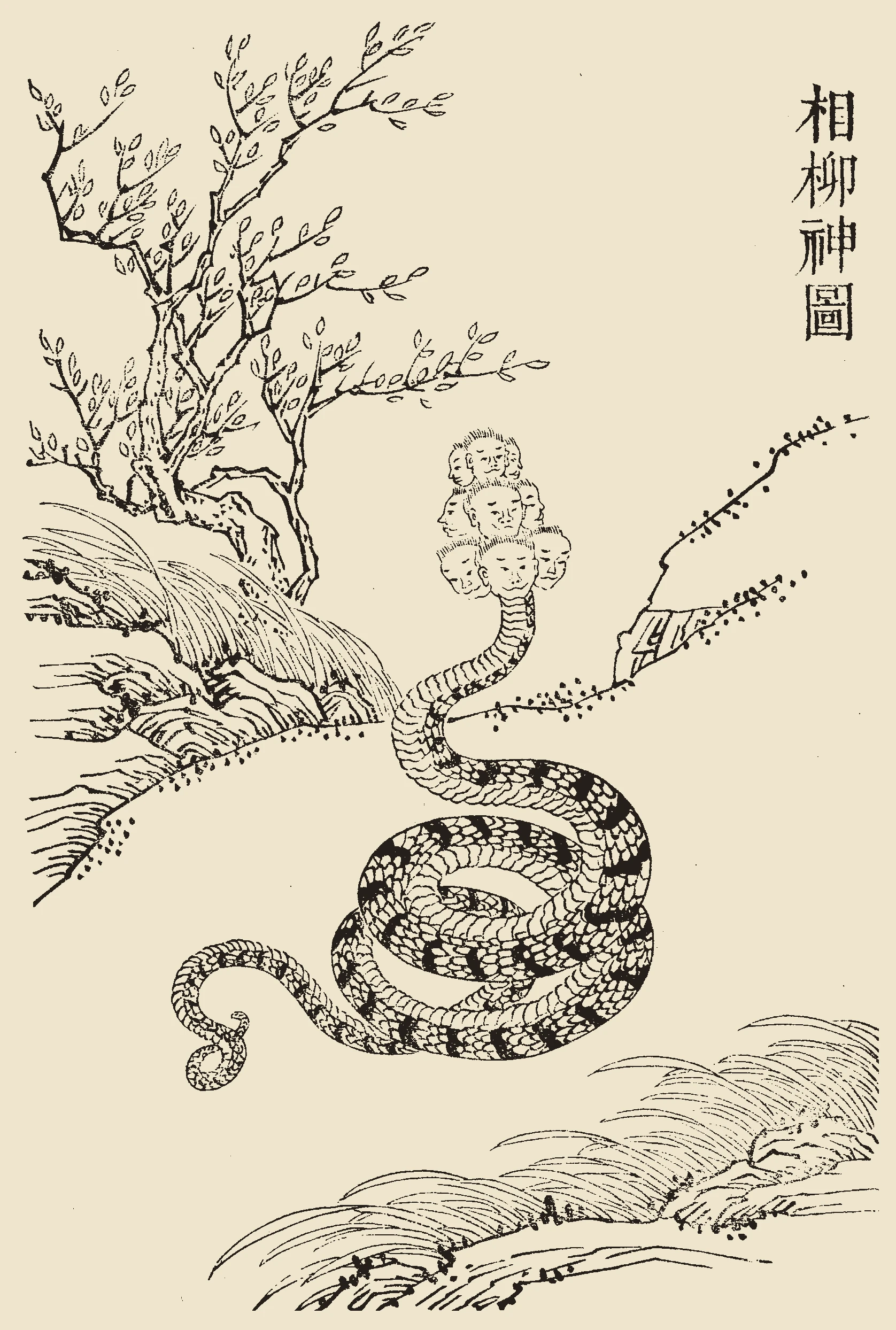
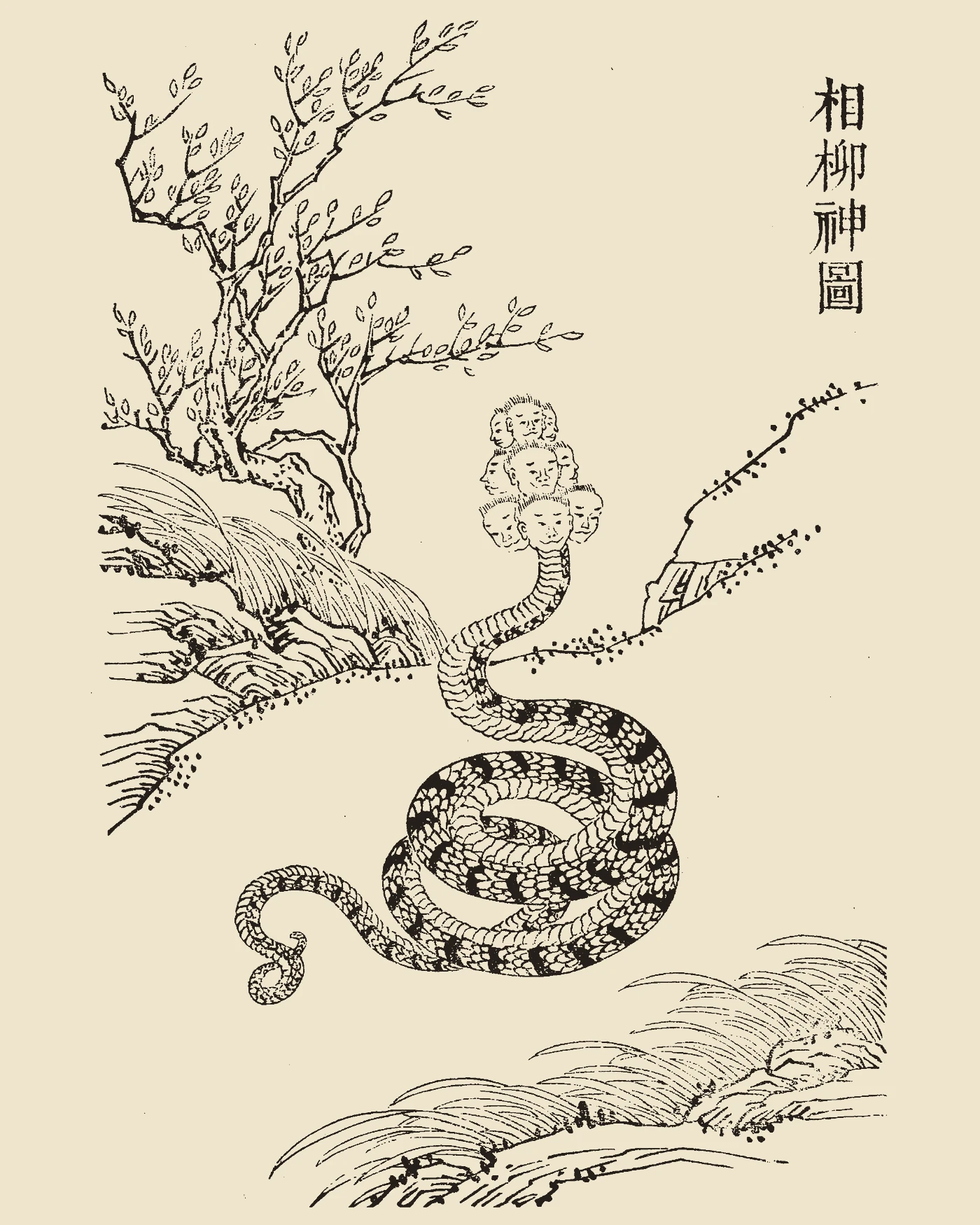
Xiangliu Shen Tu 相柳神圖, the nine-headed serpent deity coiled amidst rocky slopes. Gujin Tushu Jicheng 古今圖書集成, Shen Yi Dian (Section on Spirits and the Supernatural), woodblock print, 1726清·陈梦雷等编《古今图书集成·神异典》“相柳神图”,雍正四年(1726)铜活字印本 · Public domain公有领域Woodblock print of Xiangliu Shi from Hu Wenhuan's Xin Ke Shan Hai Jing Tu, juan 2, page 94, 1593 (Wanli era, Ming dynasty)明万历二十一年(1593)胡文焕编《新刻山海经图》卷下第94页“相柳氏”插图木刻版画 · Hu Wenhuan 胡文煥 (ed.)胡文焕 编, 15931593年Xiangliu depicted in the Japanese Edo-period picture scroll Kaiki-chōjū (Illustrated Strange Birds and Beasts), color on paper, 18th–19th century日本江户时代绘卷《怪奇鸟兽图卷》中的相柳,纸本设色,18–19世纪 · Unknown, 18th–19th century18–19世纪
Highlighted words: anatomy part · feature · form type — tap to jump标色词:形态部位 · 特征 · 形态类别,点击可跳转
The minister of Gonggong was named Xiangliu Shi; he had nine heads and fed upon nine mountains. Wherever Xiangliu came, that place became marsh and creek. Yu slew Xiangliu; his blood was rank and foul, and no seeds of the five grains could be planted there. Yu excavated the soil, yet three times it sank down; thereupon he made of it the Terraces of the Many Thearchs. It lies north of Kunlun and east of Rouli. Xiangliu had nine heads with human faces, and a serpent body that was blue-green.
The minister of Gonggong was named Xiangyao; he had nine heads and a serpent body, coiled around itself, and fed upon nine territories. Wherever he spat or rested became marshes and springs, smelling acrid or bitter, so that no beasts could dwell there. When Yu quelled the floodwaters, he slew Xiangyao; his blood was rank and reeking, unable to grow grain; the land was flooded with water and uninhabitable.
Comparing the Books典籍对比
The Shan Hai Jing portrays Xiangliu (or Xiangyao) as an apocalyptic serpentine minister of Gonggong whose venomous breath and tainted blood poisoned both soil and water, requiring the civilizing might of Yu the Great to conquer his blight and consecrate the spoiled earth into the sacred Terraces of the Thearchs.
The story来历与故事
The noxious nine-headed serpent minister of the water god Gonggong: an ancient monster of flood and poison whose rank blood spoiled the soil, defeated only when Yu the Great consecrated the blighted earth with the Terraces of the Thearchs.
Minister of Gonggong and the Blight of Nine Mountains水神共工之臣与九山之蚀
Serving the rebellious water god Gonggong, Xiangliu ravaged the primeval realm with venomous waters.身为共工重臣,相柳在九山之上饕餮暴虐,所经之地尽皆化为苦涩恶臭的泥淖泽国。
In the mythological topography of the Shan Hai Jing, Xiangliu (also written as Xiangyao) appears as the calamitous chief minister to Gonggong, the rebellious sovereign of waters. In the Classic of Regions Beyond the Northern Sea, the ancient text records: 'The minister of Gonggong was named Xiangliu Shi; he had nine heads and fed upon nine mountains. Wherever Xiangliu came, that place became marsh and creek.'
Endowed with nine human-faced heads mounted upon a colossal serpentine torso, Xiangliu's physiological influence on the terrestrial landscape was utterly ruinous. The Great Wilderness: North adds that wherever the creature spat or rested, the waters turned bitter and foul, exuding noxious vapors so virulent that no beasts could dwell there. He embodied the primeval terror of catastrophic floodwaters and irremediable environmental toxicity.
Woodblock print of Xiangliu Shi from Hu Wenhuan's Xin Ke Shan Hai Jing Tu, juan 2, page 94, 1593 (Wanli era, Ming dynasty)明万历二十一年(1593)胡文焕编《新刻山海经图》卷下第94页“相柳氏”插图木刻版画
The Battle with the Great Yu and the Terraces of the Thearchs大禹诛戮巨凶与筑造众帝之台
After Yu slew the nine-headed beast, his reeking blood polluted the soil until sacred terraces were raised.大禹力斩凶神相柳,因其毒血浸染土壤致百谷不生,大禹三次掘筑方成众帝之台以镇恶煞。
During the legendary era of the Great Deluge, the mythological hero Yu the Great mobilized imperial forces to subdue primeval monsters and channel overflowing rivers to the sea. Encountering the ravages of Gonggong's serpentine retainer, Yu confronted and slew the nine-headed monster in epic combat. However, even in death, Xiangliu's demonic corruption threatened the mortal realm: his spraying blood was so profoundly rank and polluted that no seeds of the five grains could take root in the soil.
To cleanse and remediate the desecrated landscape, Yu ordered the land to be excavated three times, yet each time the pit caved in under demonic subsidence ('三仞三沮'). Ultimately, Yu gathered sacred earth from all quarters of the empire to build an elevated sanctuary over the polluted marsh: the Terraces of the Many Thearchs (Zhongdi zhi Tai), situated north of Mount Kunlun, forever sealing away the primordial venom beneath monuments to celestial harmony.
Xiangliu depicted in the Japanese Edo-period picture scroll Kaiki-chōjū (Illustrated Strange Birds and Beasts), color on paper, 18th–19th century日本江户时代绘卷《怪奇鸟兽图卷》中的相柳,纸本设色,18–19世纪
From Primeval Deluge Demon to Japanese Kaiki-chōjū从远古水患恶兽到东亚奇谈图谱
Immortalized across centuries of myth, Xiangliu represents the primordial terror of untamed flood and poisoned waters.相柳九头蛇身的骇人形象不仅定格了上古洪水灾害的隐喻,更流传至日本江户《怪奇鸟兽图卷》中。
In the long arc of Chinese mythography, Xiangliu remained the paramount symbol of chaotic, venomous flooding—the antithesis of Yu's hydraulic order and civic engineering. Classical commentaries in the Shizhou Ji and ancient cosmological texts continued to reference the Terraces of the Thearchs as primeval monuments to human resilience over supernatural corruption.
Beyond China, the striking iconography of Xiangliu crossed into Japanese art and folklore during the Edo period. In the famous scroll Kaiki-chōjū (Illustrated Strange Birds and Beasts), artists depicted Xiangliu as a sinuous blue-scaled serpent bearing nine expressive human countenances. Today, the nine-headed hydra-like archetype of Xiangliu features prominently in contemporary fantasy donghua, manhua, and role-playing video games as an iconic boss demon of primeval waters.
Record档案
Record Card档案卡
Type
Nine-Headed Serpent (calamitous minister of Gonggong)
Also known as
Xiangyao 相繇; Nine-headed Serpent; Venomous Minister of Gonggong
Earliest source
Shan Hai Jing 山海經 (Overseas North & Great Wilds: North, c. 4th–2nd c. BCE)
Devastation
Feeds upon nine mountains; his venomous saliva turned lands into bitter, unlivable bogs
Defeat by Yu
Slain by Yu the Great; his rank blood ruined crops until Yu piled soil thrice to build the Terraces of the Thearchs
Symbolism
Archetype of primeval ecological calamity, poisonous corruption, and heroic flood-quelling civil order
Xiangliu (also called Xiangyao) is a mythical monster with nine human-faced heads and a blue-green serpent body. He was the chief minister of the rebellious water deity Gonggong and could feed upon nine mountains simultaneously.
Why did Yu the Great kill Xiangliu?
During the Great Flood, Xiangliu's venomous breath and saliva turned vast regions into bitter, toxic bogs that no animals or humans could inhabit. Yu the Great killed him to halt the devastation and restore habitable lands.
What are the Terraces of the Thearchs built on Xiangliu's blood?
After Xiangliu was slain, his rank blood poisoned the soil so severely that seeds could not grow. When Yu's attempts to excavate the earth caved in three times, he built the Terraces of the Many Thearchs (Zhongdi zhi Tai) over the site to seal the toxic earth.
Is Xiangliu depicted outside of China?
Yes. During the Edo period in Japan, Chinese mythical illustrations inspired works like the Kaiki-chōjū (Illustrated Strange Birds and Beasts), which features a color handscroll painting of Xiangliu with nine human faces on a long serpent body.