The legendary single-horned divine beast of Chinese justice that innately distinguishes right from wrong, goring the crooked and corrupt in judicial trials.华夏司法制度与法度公义的至上神兽,额生直突独角,天生性知有罪,古时决狱令其触不直者,历代御史廷尉皆以其为法冠官服之徽章。
Form外形
Like a mountain ox形貌类似山野大牛
似山牛一角
Horn独角
A single horn头上只有一只角
一角之羊也
Justice触邪
Strikes the guilty party低头抵触理亏奸人
有罪則觸
Sense辨罪
Knows guilt by nature生来便能洞察善恶
性知有罪
古者決訟,令觸不直
In ancient times when settling lawsuits, they ordered it to gore the dishonest party.
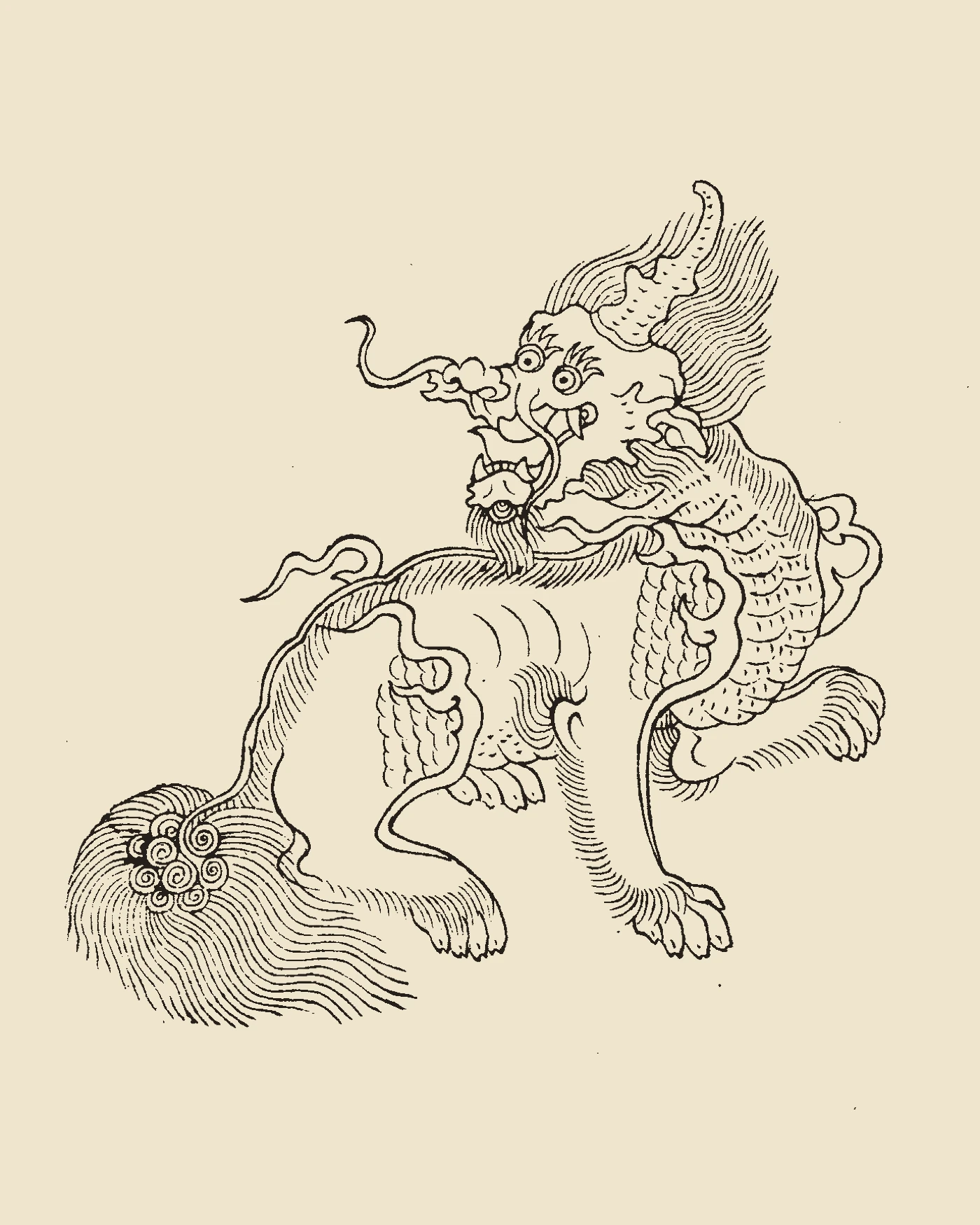
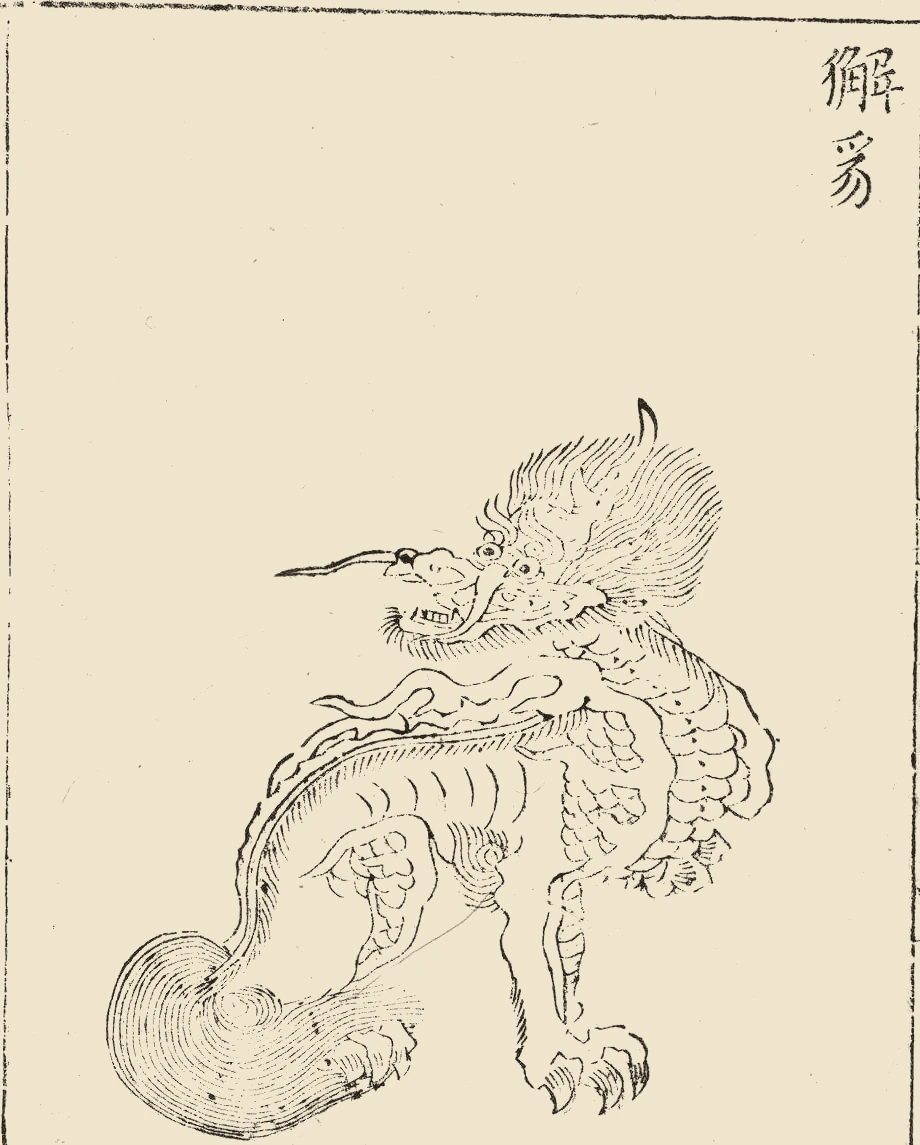
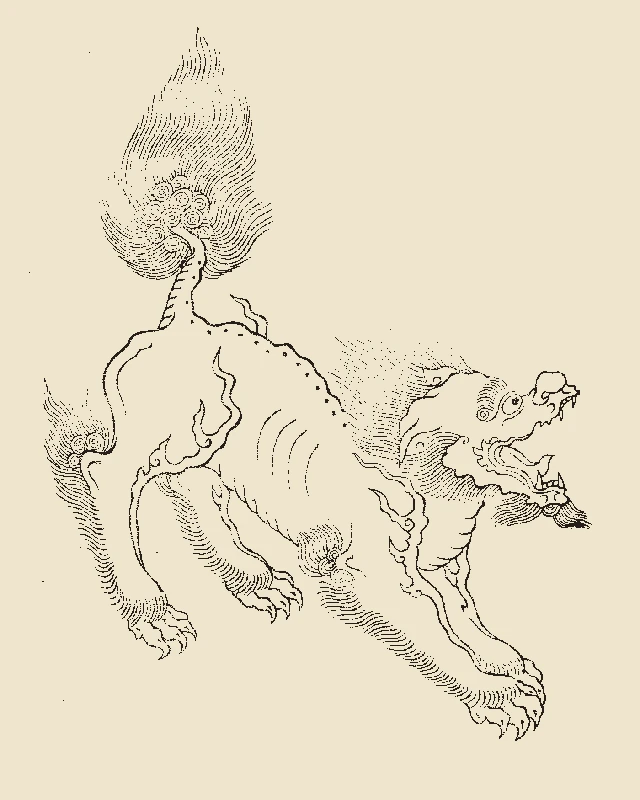
Hu Wenhuan's 1593 woodblock print of Xiezhi明·胡文焕《新刻山海经图》中的獬豸插图 — Ming woodblock print, crouching curled-hair beast with curled tail and forward horn明代格致丛书本版画,卷毛蜷尾,独角前倾,俯身蓄势
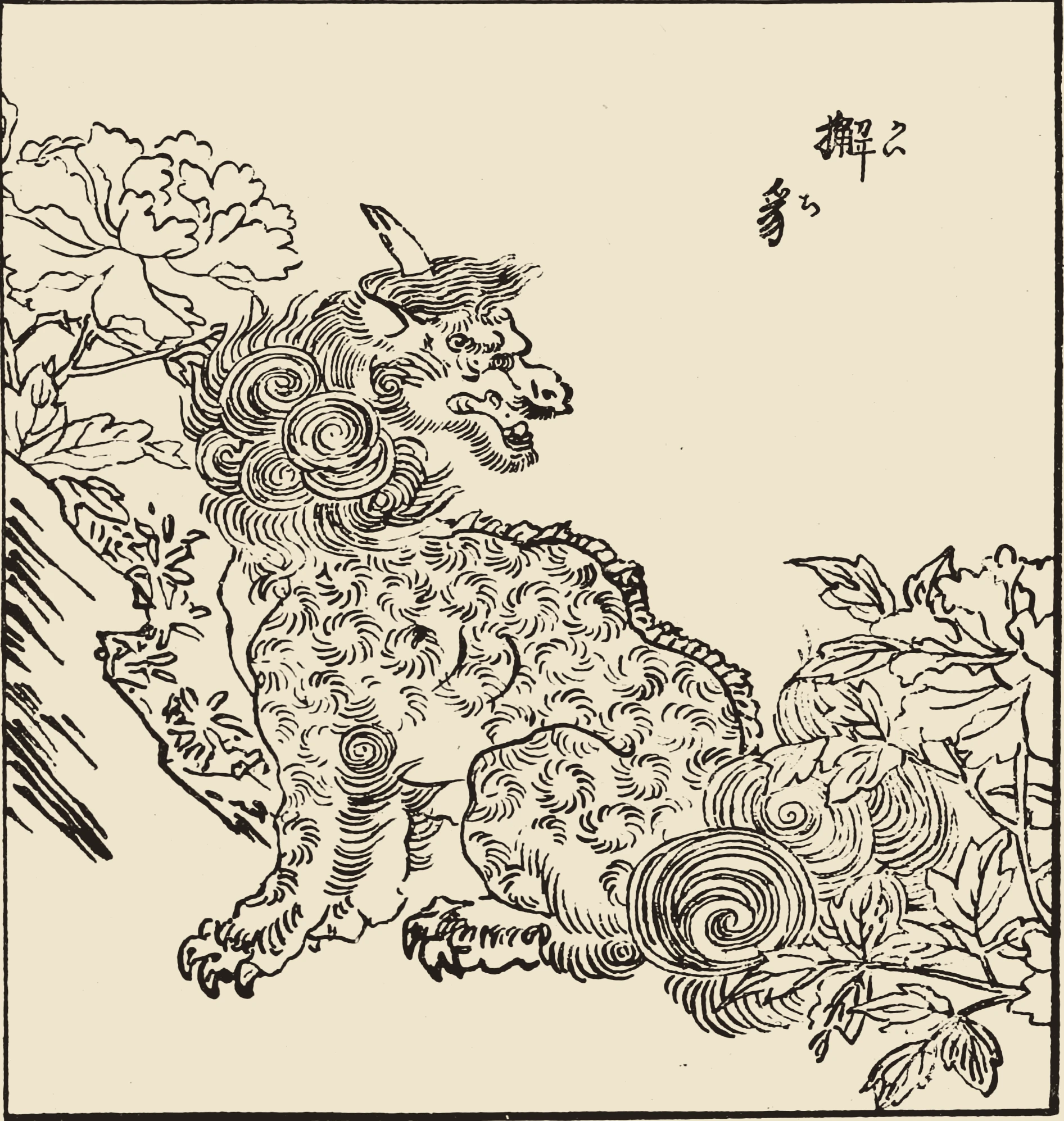
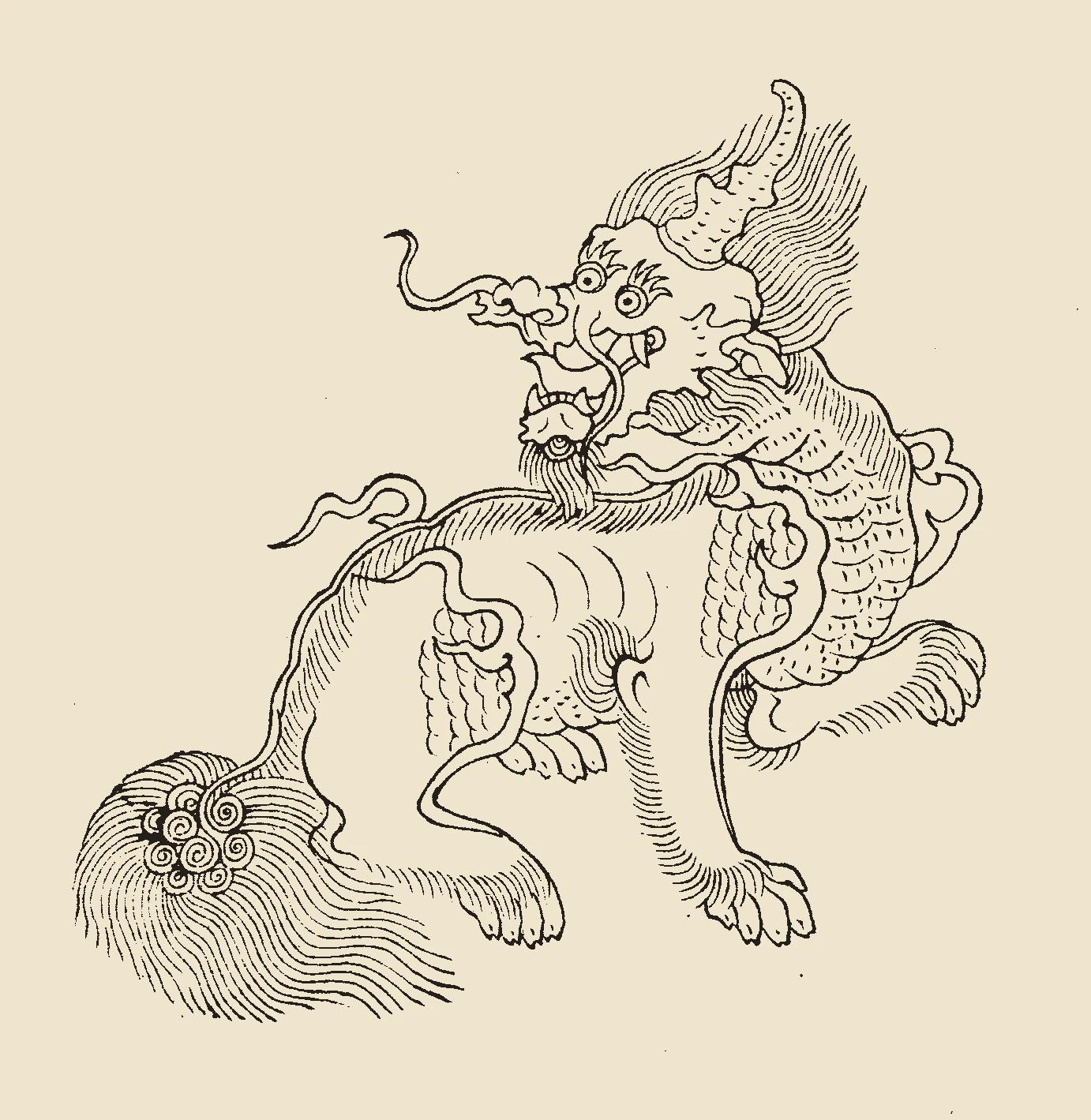
Japanese woodblock illustration of Kaichi from the Kinmō Zui (1875)日本《训蒙图汇》中的獬豸(载于1875年日文百科全书) — Japanese Kinmō Zui engraving, lion-like body with thick mane, dragon scales and goat horn日本《训蒙图汇》画风,狮首龙鳞,长鬃蜷尾,形如灵兽神羊
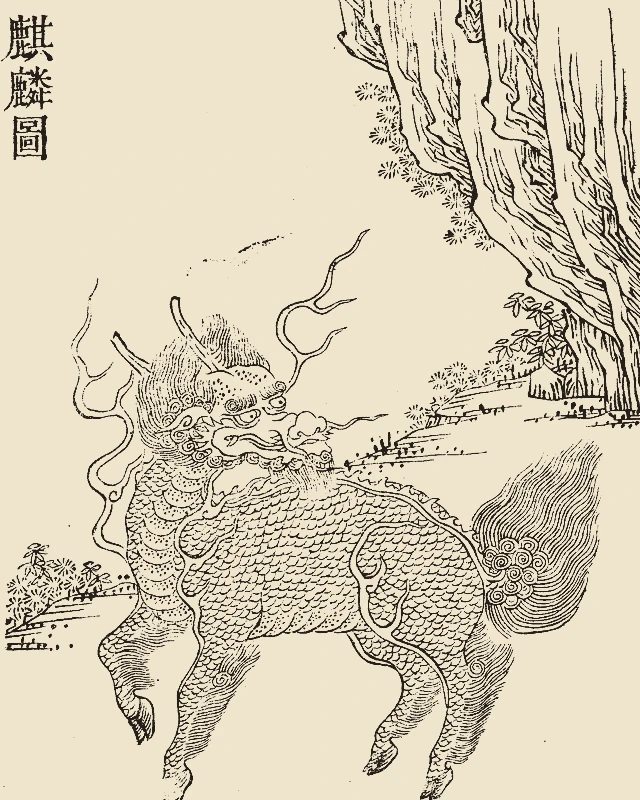
Xiezhi Tu 獬豸圖, the righteous single-horned beast of judicial discernment. Gujin Tushu Jicheng 古今圖書集成, Qin Chong Dian (Section on Birds and Animals), woodblock print, 1726清·陈梦雷等编《古今图书集成·禽虫典》“獬豸图”,雍正四年(1726)铜活字印本 · Public domain公有领域Woodblock print of Xiezhi from Hu Wenhuan's Xin Ke Shan Hai Jing Tu, juan 1, page 68, 1593 (Wanli era, Ming dynasty)明万历二十一年(1593)胡文焕编《新刻山海经图》卷上第68页“獬豸”插图木刻版画 · Hu Wenhuan 胡文煥 (ed.)胡文焕 编, 15931593年Woodblock illustration of Kaichi (Xiezhi) from Nakamura Tekisai's Kinmō Zui, collected in Serrurier's Encyclopédie japonaise (1875)日·中村惕斋编《训蒙图汇》中的“獬豸”插图,收录于1875年塞律里耶编《日本百科全书》 · Nakamura Tekisai 中村惕齋 (1629–1702)中村惕斋(1629–1702), 18751875年
Highlighted words: anatomy part · feature · form type — tap to jump标色词:形态部位 · 特征 · 形态类别,点击可跳转
The Xiezhi is a beast resembling a mountain ox with a single horn. In ancient times when deciding lawsuits, they ordered it to gore the party who was not upright.
The scholars say: the Xiezhi is a single-horned goat that by nature knows guilt. When Gao Yao administered justice, if guilt was in doubt he ordered the goat to gore the accused: if guilty it gored them, if innocent it did not.
Comparing the Books典籍对比
Ancient judicial lore portrays the Xiezhi as an indispensable arbiter of truth: Xu Shen in the Shuowen Jiezi highlights its bovine form and role in settling ancient disputes by goring the crooked, while Wang Chong in the Lunheng records its caprine form and legendary collaboration with primeval minister of justice Gao Yao.
The story来历与故事
The legendary judicial beast of ancient China: a single-horned quadruped resembling a mountain ox or goat that innately recognizes truth from deception, striking the guilty with its horn in legal trials to uphold incorruptible justice.
The Single-Horned Arbiter of Law独角神兽与皋陶断狱
Bearing a single upright horn, Xiezhi innately discerns innocence from guilt in judicial disputes.生有一柄端直独角,天生能辨忠奸曲直,见有罪者便以角触之。
In the Han dynasty etymological classic Shuowen Jiezi, scholar Xu Shen recorded the primary classical definition of the creature: 'Xiezhi is a beast resembling a mountain ox with a single horn. In ancient times when deciding lawsuits, they ordered it to gore the party who was not upright.' Endowed with celestial moral perception, the animal required no earthly bribery or circumstantial evidence; in any contested legal dispute, it marched forward and thrust its horn unerringly against the corrupt litigant.
Philosopher Wang Chong further documented the primeval collaboration between the beast and Gao Yao, the legendary minister of justice under the sage king Shun. In the Lunheng, Wang Chong writes that when Gao Yao tried a case where evidence was inconclusive and the truth remained in doubt, he summoned the single-horned goat: if the accused was guilty, it gored them; if innocent, it refused to touch them, establishing the earliest Chinese ideal of supernatural evidentiary impartiality.
Woodblock print of Xiezhi from Hu Wenhuan's Xin Ke Shan Hai Jing Tu, juan 1, page 68, 1593 (Wanli era, Ming dynasty)明万历二十一年(1593)胡文焕编《新刻山海经图》卷上第68页“獬豸”插图木刻版画
The Xiezhi Crown and Imperial Justice獬豸冠与历代法度象征
Imperial censors wore the Xiezhi cap, adopting the beast as the ultimate symbol of upright integrity.汉唐御史宪台皆戴獬豸冠,以神兽直道守正之风砥砺法度公义。
Because of its incorruptible discernment, the Xiezhi was swiftly adopted by Chinese dynasties as the supreme sartorial symbol of imperial censors, judges, and ministers of justice. During the Warring States period, King Huiwen of Chu was recorded wearing a cap fashioned in the likeness of the beast; by the Qin and Han dynasties, this headwear was officially codified into the legal bureaucracy as the Xiezhi Guan (獬豸冠, also known as the Fa Guan or Cap of Law).
This judicial symbolism persisted unbroken through the Ming and Qing dynasties. Imperial legal inspectors and censors of the Censorate (Duchayuan) wore embroidered rank badges (buzi) depicting the seated Xiezhi on their court robes. While civilian magistrates wore cranes or peacocks, judicial guardians exclusively bore the one-horned beast, serving as a constant visual warning against dereliction of duty and bribery.
Woodblock illustration of Kaichi (Xiezhi) from Nakamura Tekisai's Kinmō Zui, collected in Serrurier's Encyclopédie japonaise (1875)日·中村惕斋编《训蒙图汇》中的“獬豸”插图,收录于1875年塞律里耶编《日本百科全书》
From Ancient Courthouses to Modern Emblem从古刹公堂到当代司法徽章
Enduring across East Asia, Xiezhi remains the revered guardian emblem outside modern courts of law.在东亚司法文化中薪火相传,今日现代法院门前依然伫立着獬豸神雕。
In modern Sinophone society and East Asian jurisprudence, the Xiezhi has made a triumphant transition from mythological beast to the universal symbol of the rule of law. Sculptures of the single-horned creature flank the gateways of modern courts, universities of politics and law, and procuratorates across China and East Asia, standing as immortal sentinels of constitutional equality and judicial integrity.
Across the wider Asian sphere, the creature's cultural footprint is equally pervasive. In Korea, known as Haetae, the beast served as the guardian of Gyeongbokgung Palace in Seoul against fire and corruption, becoming the official civic symbol of the city of Seoul. In contemporary pop culture, literature, and gaming, Xiezhi appears as an unbribable guardian spirit whose presence dispels falsehood and enforces unbending truth.
Record档案
Record Card档案卡
Type
Judicial Beast (righteous single-horned judge)
Also known as
Xiezhai; Haetae (Korea); Kaichi (Japan); Beast of Judicial Righteousness
Earliest source
Shuowen Jiezi 說文解字 & Lunheng 論衡 (c. 1st–2nd c. CE)
Powers
Instinctively perceives guilt and innocence; gores corrupt officials and unjust litigants with its horn
Function
Assisted ancient judge Gao Yao 皋陶 in trials; emblem of imperial censors and judicial integrity
Symbolism
Supreme Chinese symbol of impartial justice, moral discernment, and the rule of law
The Xiezhi is a legendary divine beast in Chinese mythology that looks like an ox or goat with a single horn on its head. It possesses the supernatural ability to distinguish right from wrong, goring dishonest and corrupt people during judicial trials.
What is the connection between Xiezhi and the ancient judge Gao Yao?
According to the Lunheng, when ancient judicial minister Gao Yao encountered difficult legal trials with insufficient evidence, he ordered the Xiezhi to examine the accused: the beast would gore those who were guilty and spare the innocent, creating an impartial trial.
Why did Chinese judges and censors wear the Xiezhi Crown?
Starting from the Qin and Han dynasties, imperial censors and judicial officials wore the Xiezhi Guan (Cap of Law), shaped like the beast's upright horn, to signify their duty of uncompromising integrity and fearlessness in exposing corruption.
What is the Korean Haetae and is it the same as Xiezhi?
Yes. The Korean Haetae is the direct cultural transmission of the Chinese Xiezhi. In Korea, Haetae statues guard historic palaces like Gyeongbokgung to ward off fire and injustice, and Haetae is the official civic mascot of Seoul.