Chángyòu

長右Changyou

The four-eared monkey-like beast of Mount Changyou from the Shan Hai Jing: chanting like a human, its sighting portends great floods.《山海经》记载长右山水灾异兽:状如猕猴而四耳,其音如吟,见则郡县大水。

Body身形

Like an ape形貌宛若猕猴

其狀如禺

Head头部

Four ears生有四只耳朵

四耳

Voice鸣声

Chanting call鸣叫如吟哦声

其音如吟

Omen征兆

Great flood现身郡县发大水

見則郡縣大水

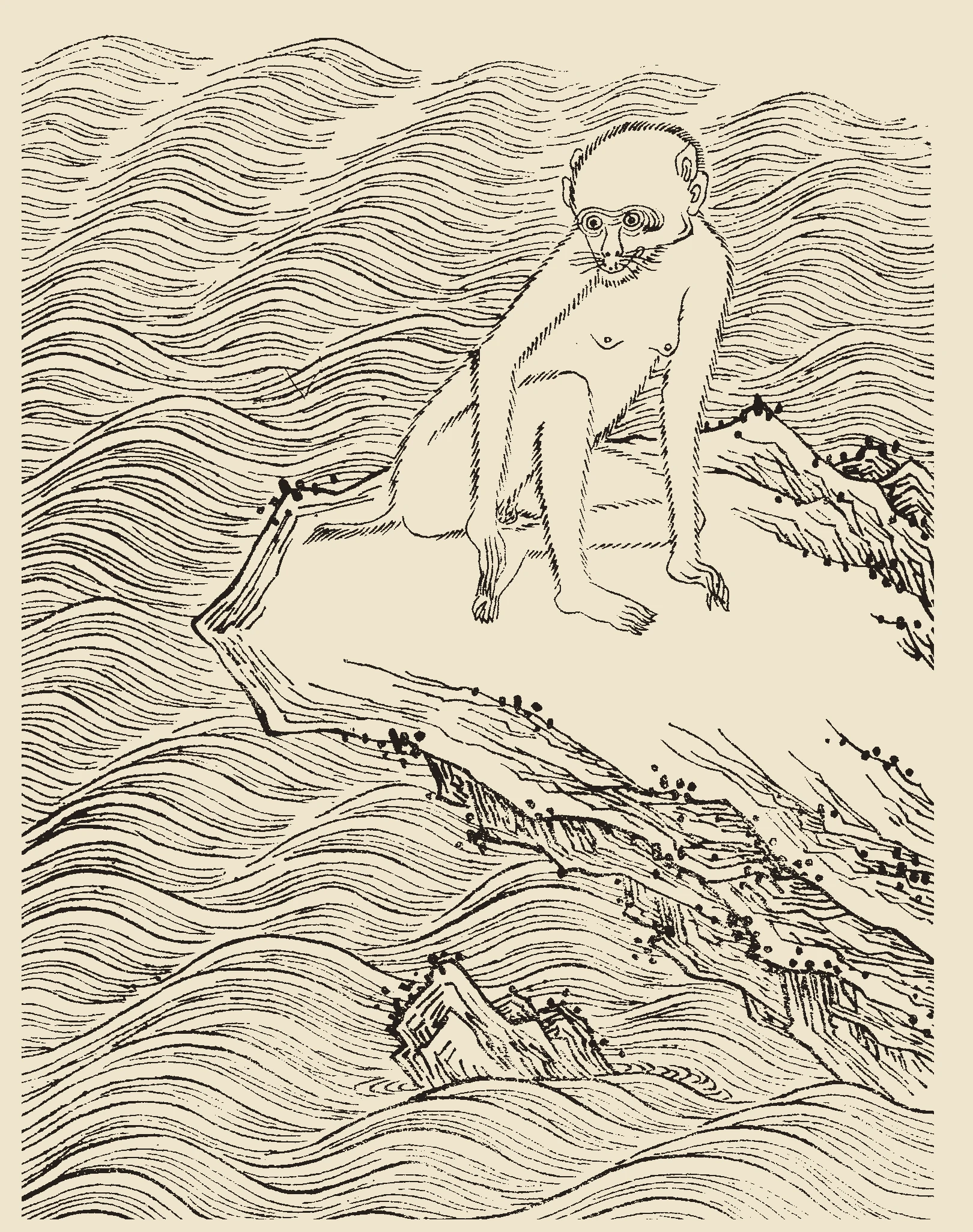
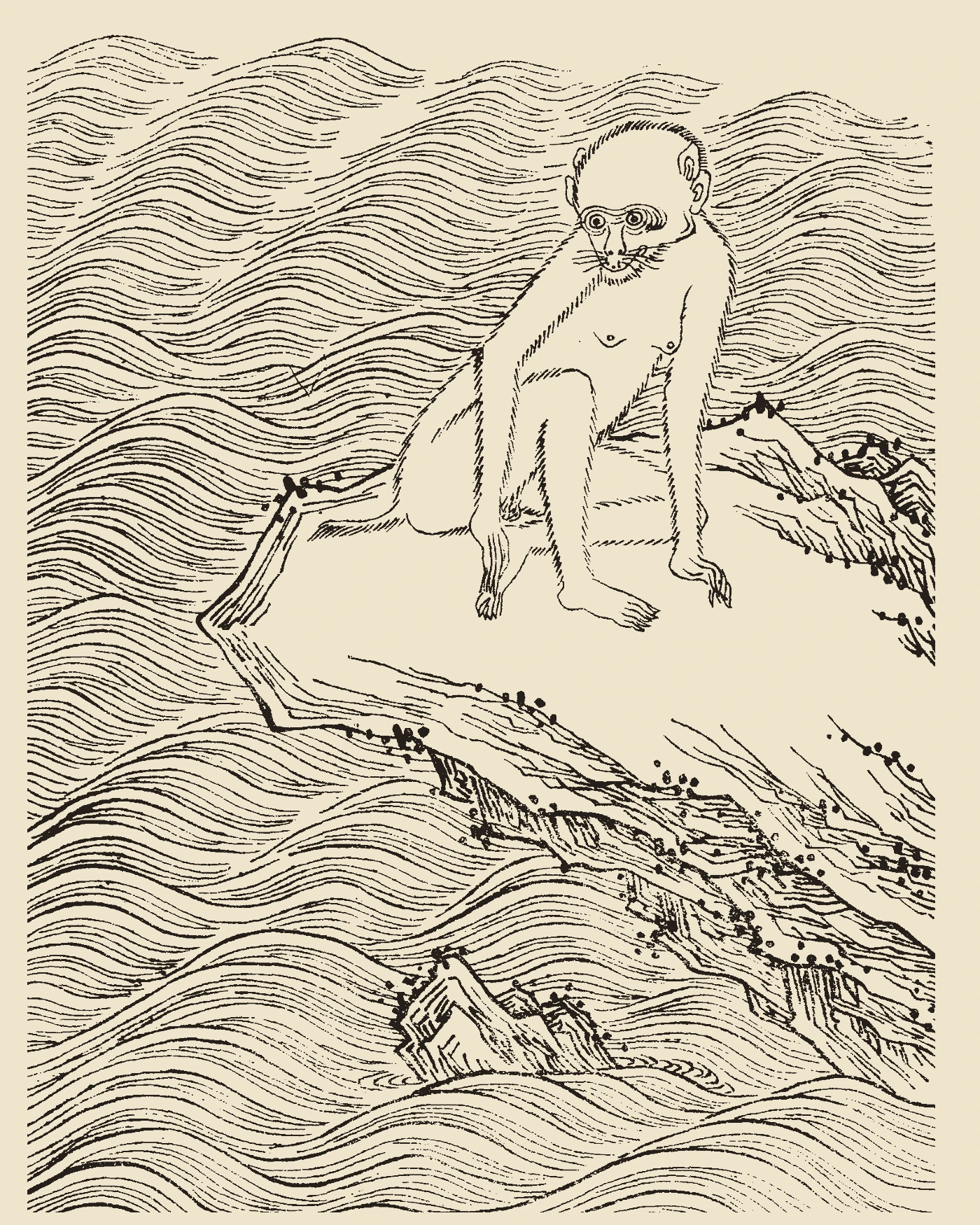
Woodblock print from Gujin Tushu Jicheng showing Changyou, a four-eared monkey perched amidst floodwaters四耳Four ears生有四耳四耳Four ears生有四耳其狀如禺Monkey-like torso形貌如禺其狀如禺Monkey-like torso形貌如禺其狀如禺Elongated limbs长臂双足其狀如禺Elongated limbs长臂双足見則郡縣大水Surging floodwaters大水奔涌見則郡縣大水Surging floodwaters大水奔涌
有獸焉,其名長右

There is a beast here; its name is Changyou.

山海經·南山經
Changyou Tu 長右圖, the four-eared ape portending great floods. Gujin Tushu Jicheng 古今圖書集成, Animal Kingdom, juan 239, woodblock print, 1726清·陈梦雷等编《古今图书集成·禽虫典》卷二百三十九“长右图”,雍正四年(1726)铜活字印本 · Public domain公有领域

Highlighted words: anatomy part · feature · form type — tap to jump标色词:形态部位 · 特征 · 形态类别,点击可跳转

The texts原文

Original Text & Translation原文与译文

山海經·南山經 · Shan Hai Jing · Wikisource

有獸焉,其狀如禺而四耳,其名長右,其音如吟,見則郡縣大水。
There is a beast here whose form resembles an ape, with four ears. Its name is Changyou; its voice is like chanting. When it appears, the prefectures and counties suffer great floods.

Comparing the Books典籍对比

The Shan Hai Jing identifies Changyou as a four-eared aquatic ape whose appearance unfailingly heralds widespread deluge.
The story来历与故事

The four-eared monkey omen of Mount Changyou in the Shan Hai Jing: with a voice like chanting, its sighting heralds massive flooding across prefectures.

The Four-Eared Monkey of Mount Changyou长右之山:其状如禺

Changyou is an ape-like beast dwelling upon Mount Changyou.《南山经》记载长右之山无草木而多水,其中有兽名曰长右。

In the Classic of the Southern Mountains, Changyou dwells upon Mount Changyou, four hundred and fifty li southeast of Mount Gui.

The classic notes that Mount Changyou is barren of trees and grasses, yet abounds with flowing waters.

Ape Form, Chanting Voice, and Deluge Omen音如吟哦:郡县大水

It has four ears and cries like chanting; seeing it heralds deluge.经文记其状如禺而四耳,其音如吟,见则郡县发大水。

The Shan Hai Jing portrays Changyou as resembling a macaque monkey with four prominent ears.

Its vocalization sounds like a human chanting or groaning, and ancient lore held that its sighting brought widespread inundation.

The Gujin Tushu Jicheng Woodblock Print清代图谱:水石长右

Woodblock prints illustrate it as a vigilant ape crouched on sea rocks.《古今图书集成》画其为一头蹲坐于汹涌大水岩礁之上的四耳猕猴。

The 1726 imperial encyclopedia Gujin Tushu Jicheng illustrates Changyou as an alert simian crouched on a boulder surrounded by violent waves.

The print captures its watchful gaze, slender primate limbs, and multi-eared head poised against turbulent waters.

Record档案

Record Card档案卡

TypeWater-Omen Beast (four-eared monkey of Mount Changyou)
Also known asChángyòu 長右; Changyou Beast (長右之獸)
HabitatMount Changyou (長右之山) in the Southern Mountains, barren of flora and rich in water
EffectForetells catastrophic regional floods (見則郡縣大水)
Earliest source山海經·南山經
Source books山海經·南山經
Image sourceChen Menglei 陳夢雷 (ed.) · Wikimedia Commons
LicensePublic domain

Frequently Asked Questions

What does Changyou look like in the Shan Hai Jing?

The text describes it as resembling a macaque (ape) with four ears.

What sound does Changyou make?

The classic notes that its cry sounds like chanting or groaning ('its sound is like chanting').

What omen is associated with Changyou?

Its appearance was regarded as a portent of regional inundation ('seen, then counties suffer great water').