Fūzhū

夫諸Fuzhu

The four-horned white deer of Mount Ao'an in the Shan Hai Jing: with four antlers upon a serene white body, its sighting heralds great floods.《山海经》记载敖岸神兽夫诸:状如白鹿而四角,见则其邑大水。

Horn角

Four branching antlers头上分生四角

四角

Body身形

Shaped like a white deer通体皎洁如鹿

其狀如白鹿

Peril灾异

Brings county-wide floods现世郡邑水患

見則其邑大水

Home栖息

Mount Ao'an of rich jade常出美玉神山

敖岸之山

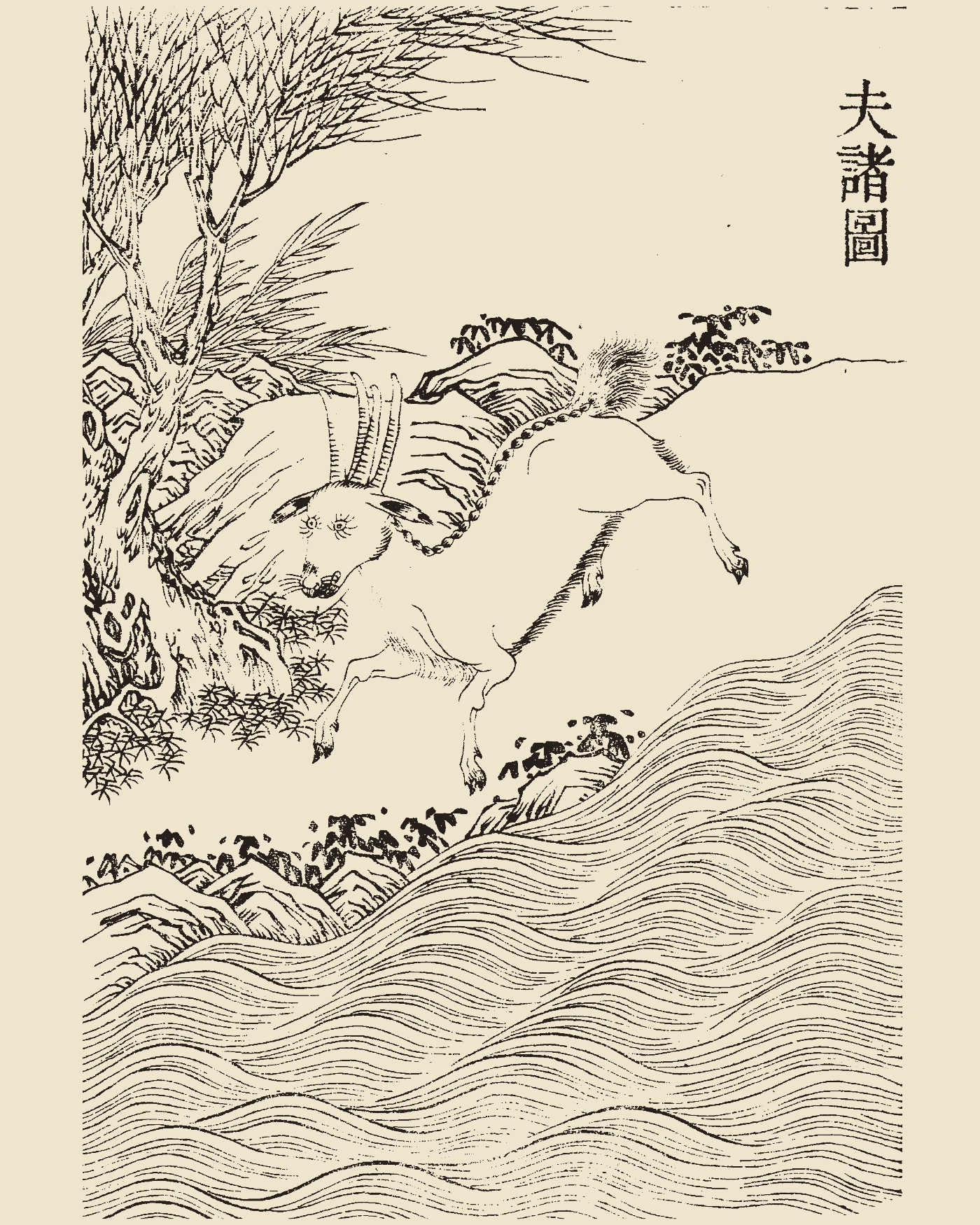
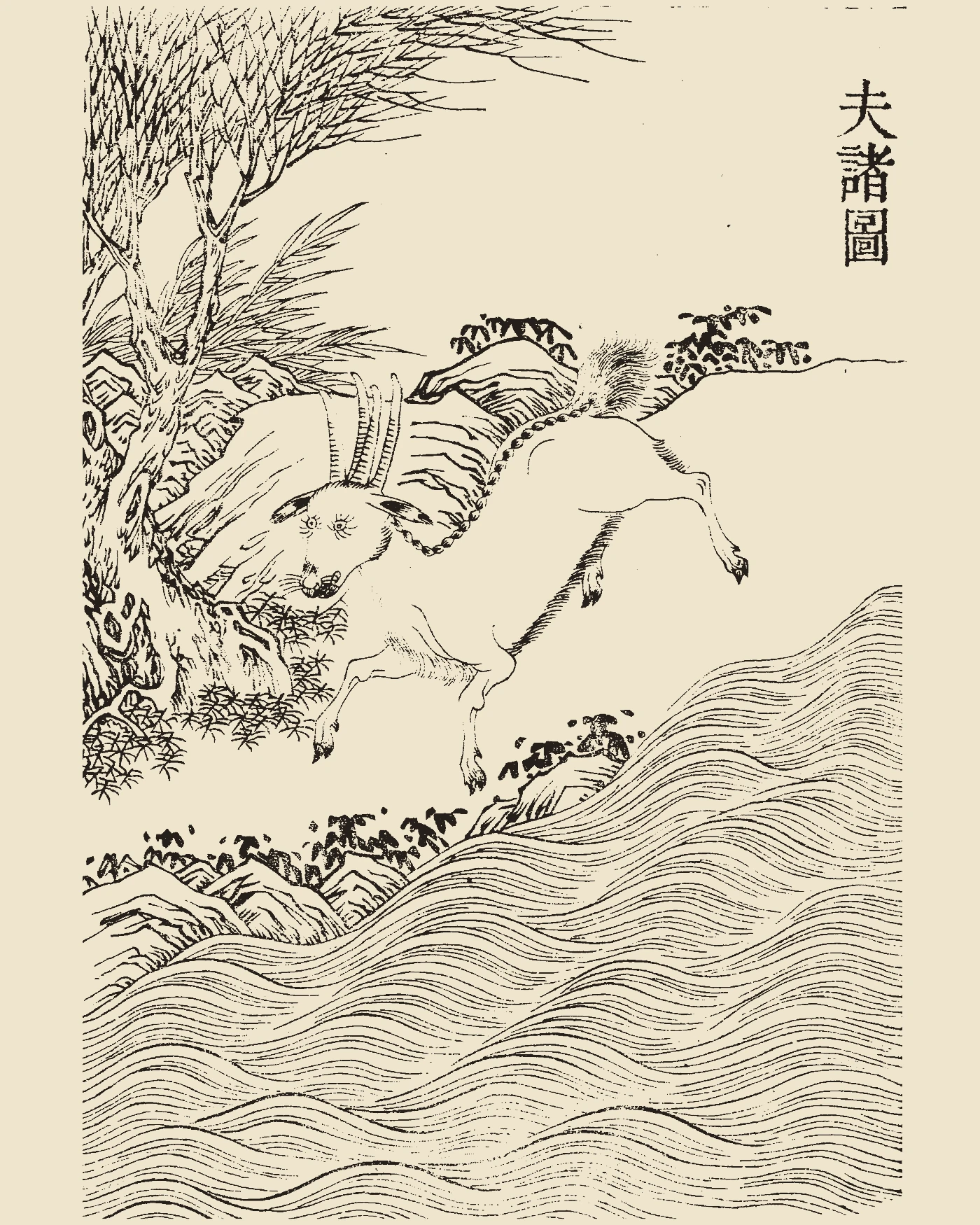
Woodblock print from Gujin Tushu Jicheng showing Fuzhu, a white deer with four horns standing near rocks四角Four antlers额顶四角四角Four antlers额顶四角白鹿White deer head白鹿面额白鹿White deer head白鹿面额狀如白鹿White deer body皎洁鹿身狀如白鹿White deer body皎洁鹿身四足Slender legs修长四肢四足Slender legs修长四肢
有獸焉,名曰夫諸

There is a beast here; its name is Fuzhu.

山海經·中山經
Fuzhu Tu 夫諸圖, the four-horned white deer whose sighting heralds great floods. Gujin Tushu Jicheng 古今圖書集成, Animal Kingdom, juan 298, woodblock print, 1726清·陈梦雷等编《古今图书集成·禽虫典》卷二百九十八“夫诸图”,雍正四年(1726)铜活字印本 · Public domain公有领域

Highlighted words: anatomy part · feature · form type — tap to jump标色词:形态部位 · 特征 · 形态类别,点击可跳转

The texts原文

Original Text & Translation原文与译文

山海經·中山經 · Shan Hai Jing · Wikisource

敖岸之山,其陽多㻬琈之玉,其陰多赭、黃金。神熏池居之。是常出美玉。有獸焉,其狀如白鹿而四角,名曰夫諸,見則其邑大水。
Mount Ao'an: its sunny side has much zhufu jade, and its shady side has much ochre and yellow gold; the spirit Xunchi dwells here. There is a beast here shaped like a white deer with four horns, named Fuzhu; when seen, there will be a great flood in that settlement.

Comparing the Books典籍对比

Unlike ferociously predatory deluge beasts like Heyu, Fuzhu possesses the serene, elegant beauty of a four-horned white deer, making its flood omen all the more uncanny.
The story来历与故事

The four-horned white deer of Mount Ao'an in the Shan Hai Jing: bearing four branching antlers upon a white cervid body, its sighting heralds great floods across the county.

The Beast of Mount Ao'an敖岸灵兽:其名曰夫诸

Fuzhu is a four-horned white deer dwelling on Mount Ao'an.《中山经》记载敖岸之山多美玉黄金,其中有兽名曰夫诸。

In the Classic of the Central Mountains, Fuzhu dwells upon Mount Ao'an, the foremost peak of the Fu Mountains.

The sunny slopes yield radiant zhufu jade while the northern shade contains ochre and yellow gold, where spirit Xunchi resides.

White Deer Form, Four Horns, and Deluge Omen四角白鹿:见则大水

It resembles a white deer with four horns and brings floods.经文记其状如白鹿而四角,名曰夫诸,见则其邑大水。

The Shan Hai Jing portrays Fuzhu as shaped like a pure white deer with four magnificent branching horns atop its brow.

Despite its gentle and graceful countenance, ancient chronicles record that whenever it appears in human settlements, massive deluges submerge that county ('jian ze qi yi da shui').

The Gujin Tushu Jicheng Woodblock Print清代图谱:四角仙鹿

Woodblock prints illustrate its elegant branched antlers and spotted coat.《古今图书集成》画其为一头昂首挺立、生有四扇繁茂歧角之仙鹿。

The 1726 imperial encyclopedia Gujin Tushu Jicheng depicts Fuzhu standing poised amidst mountain stones with four spreading antlers.

The woodblock print illustrates its delicate cloven hooves, attentive eyes, and title cartouche reading Fuzhu Tu in the upper right.

Record档案

Record Card档案卡

TypeDeluge Deer (four-horned white deer whose serene appearance portends catastrophic deluge)
Also known asFūzhū 夫諸; Ao'an Fuzhu (敖岸之夫諸)
HabitatMount Ao'an (敖岸之山) in the Central Mountains, abounding in fine jade, ochre, and gold, where spirit Xunchi dwells
OmenGreat flooding across the county or settlement (見則其邑大水)
Earliest source山海經·中山經
Source books山海經·中山經
Image sourceChen Menglei 陳夢雷 (ed.) · Wikimedia Commons
LicensePublic domain

Frequently Asked Questions

What does Fuzhu look like in the Shan Hai Jing?

The classic describes Fuzhu as resembling a white deer with four horns ('shaped like a white deer with four horns').

What omen is associated with the sighting of Fuzhu?

Ancient texts state that whenever Fuzhu is seen, the surrounding county or town will suffer great floods ('when seen, its county has great water').

How is Fuzhu distinct from other flood beasts in Chinese myth?

Unlike grotesque or predatory flood beasts like Heyu, Fuzhu possesses the serene, elegant beauty of a white deer, making its flood omen uniquely contrasting.